Toronto neighbourhood guide
Kensington Market, Toronto: four streets, a hundred kitchens, and the city at its scruffiest
A walk through Toronto’s most wonderfully unruly neighbourhood, where immigrant food, vintage racks, and street art spill across four short blocks that still feel lived-in, not staged.
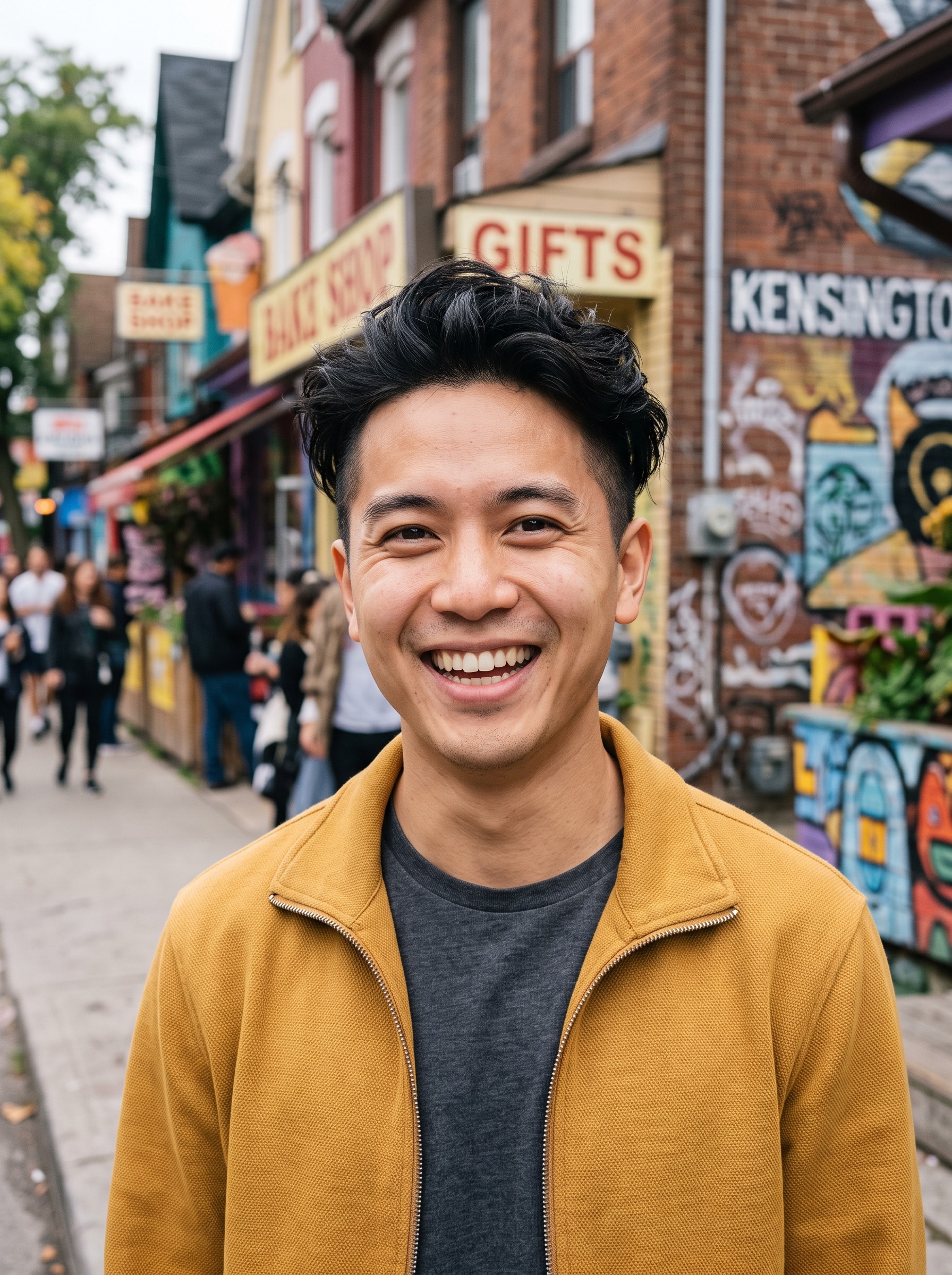
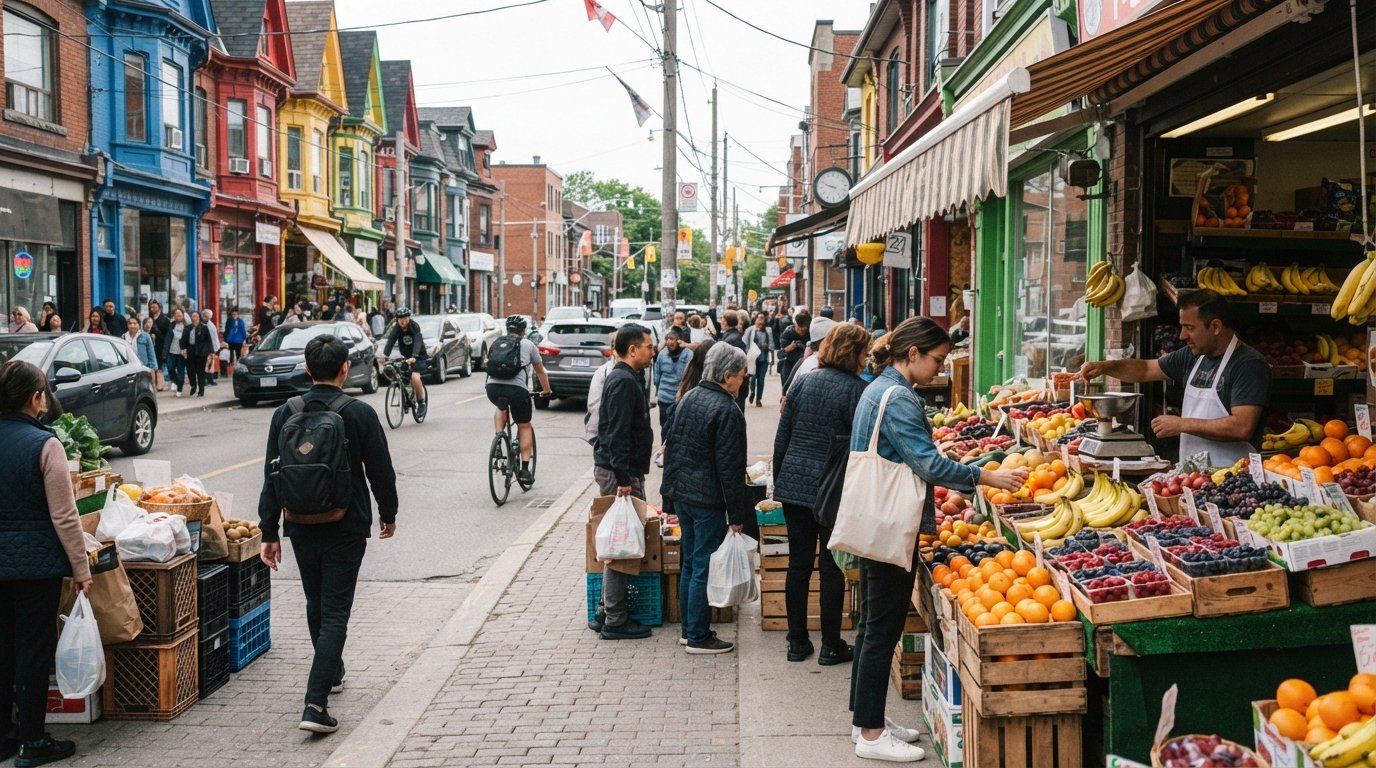
Kensington Market announces itself before you ever reach the centre of it: a hand-lettered sign, a crate of mangoes half on the sidewalk, the smell of cumin and frying dough drifting out toward Spadina. Four streets do most of the work here — Augusta, Baldwin, Nassau and Kensington Avenue — but they carry a whole city’s worth of appetite and memory. This is the old Jewish Market turned anything-but-old, a place where Toronto’s immigrant story still reads in the shopfronts, the menus, the murals, and the way people stop to talk in the middle of the block.
What Kensington Market is known for
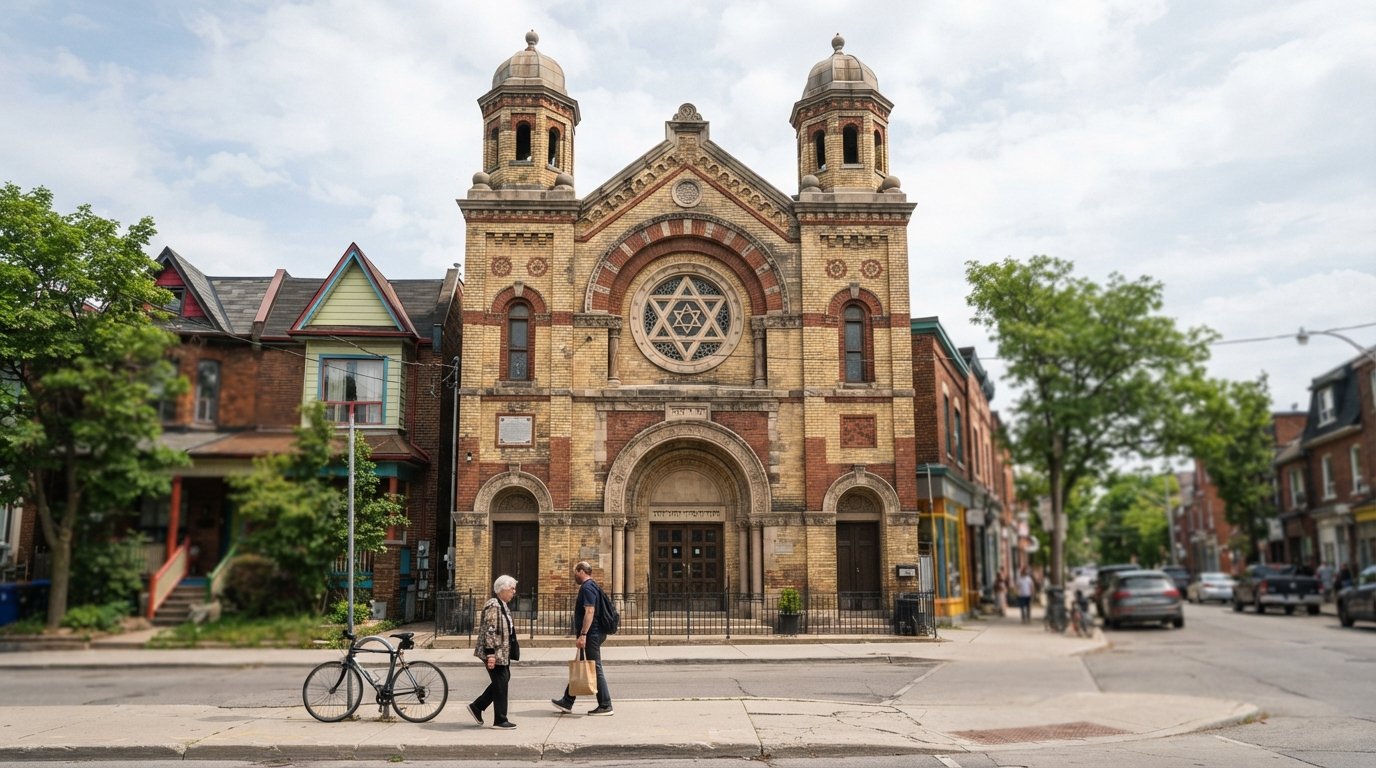
Kensington’s reputation rests on two things that might sound incompatible until you’re standing on the pavement with a taco in one hand and a bag of cheese in the other: immigrant food and counter-cultural scruff. In the 1920s and 30s, this was Toronto’s Jewish Market, and about 60,000 Jewish residents lived in and around it, worshipping at more than 30 local synagogues. The 1927 Anshei Minsk on St. Andrew Street and the Kiever Synagogue on Bellevue Avenue still stand as reminders of that era, when pushcarts and shop counters turned a rough-edged grid into a working market. Postwar, the Jewish community moved north and Portuguese, Caribbean, East Asian, Central American, Somali, Ethiopian and Chilean arrivals took over the leases in turn, each leaving a kitchen or a storefront behind.
That layering is why a single stroll can take you from Chilean empanadas to Baja fish tacos to Jamaican-Italian jerk to Sichuan chilli oil without changing neighbourhoods. It also explains why Kensington was declared a National Historic Site of Canada in 2006: not because it was polished, but because it kept changing without ever losing the street-level texture that made it matter in the first place. The Victorian row houses, built in the 1880s for Irish and Scottish labourers, are now painted every colour and stacked with fruit crates, spice sacks, vintage racks and hand-lettered signs. Graffiti covers the alleys and half the storefronts by design, not neglect. The market’s deliberate messiness is the point.
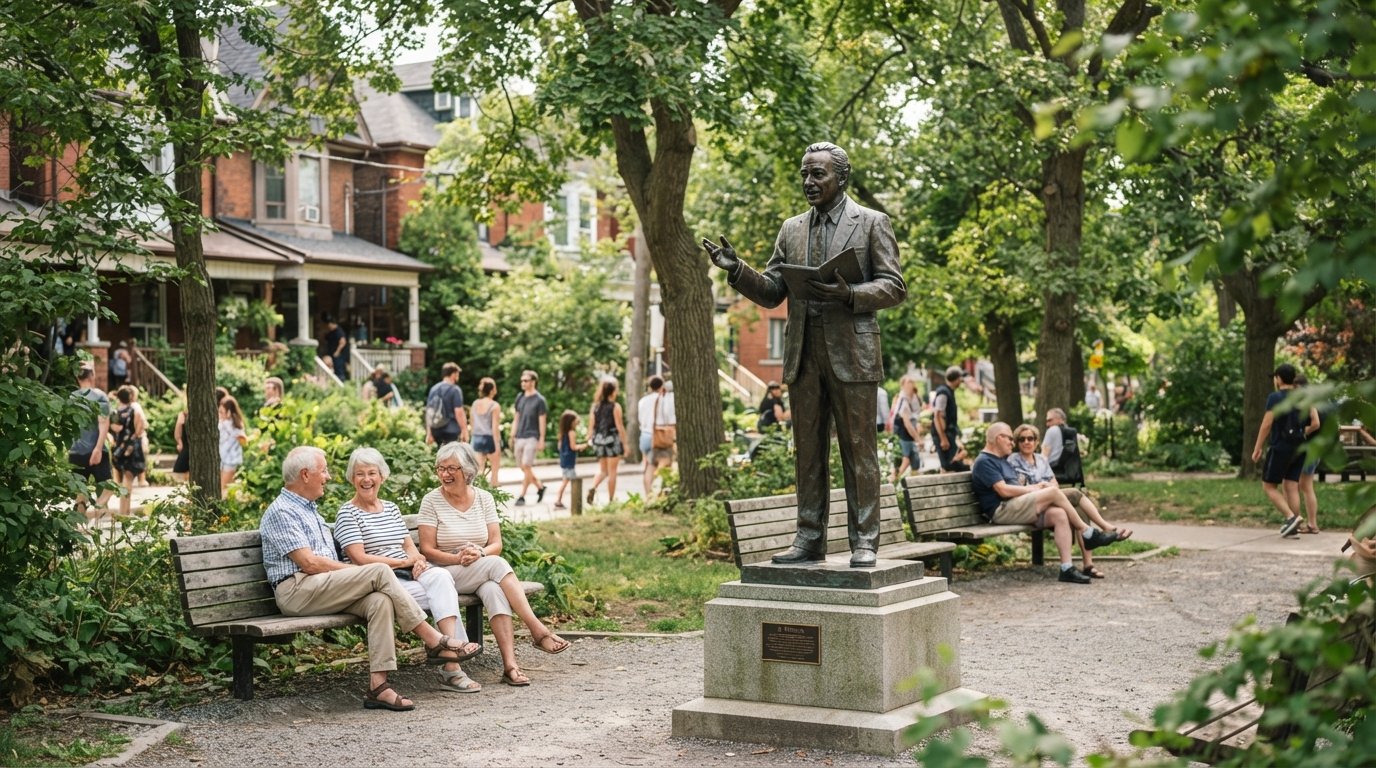
Bellevue Square Park is the green heart of all this, a little breathing space off Augusta where the neighbourhood gathers beneath the statue of the late actor Al Waxman. On a warm day, you’ll see the usual Kensington cast: students cutting through with iced coffee, artists lingering on benches, chefs on their day off, old Portuguese and Chinese shopkeepers who have held the same lease for decades, and visitors trying to decide whether they’re here for lunch or for the whole afternoon. The answer is usually both.
Where to eat & drink
This is the reason most people cross town. Kensington is one of those rare places where the day can be built entirely around grazing, and the distances are so short you can follow your nose from one counter to the next. Start with the two MICHELIN Bib Gourmand kitchens. Sunny’s Chinese, tucked down a hallway inside a Kensington Avenue mini-mall in the old Cold Tea bar unit, does homestyle Chinese with a current that runs from Sichuan to Guangdong. It’s the sort of place where chilli-oil tripe and beef shank, charred silver-needle noodles, cumin-and-chilli grilled chicken, and Hong Kong French toast with black-sesame jam feel less like a menu than a very good argument for staying another hour.
Grey Gardens, on Augusta, goes the other way: chic, seafood-forward, wine-bar polished without feeling precious. The room is walk-in friendly, the list is heavy on Niagara and Prince Edward County, and the small plates lean elegant — beef tartare, branzino crudo — which is useful when you want Kensington with a little more shine and a little less elbow grease.
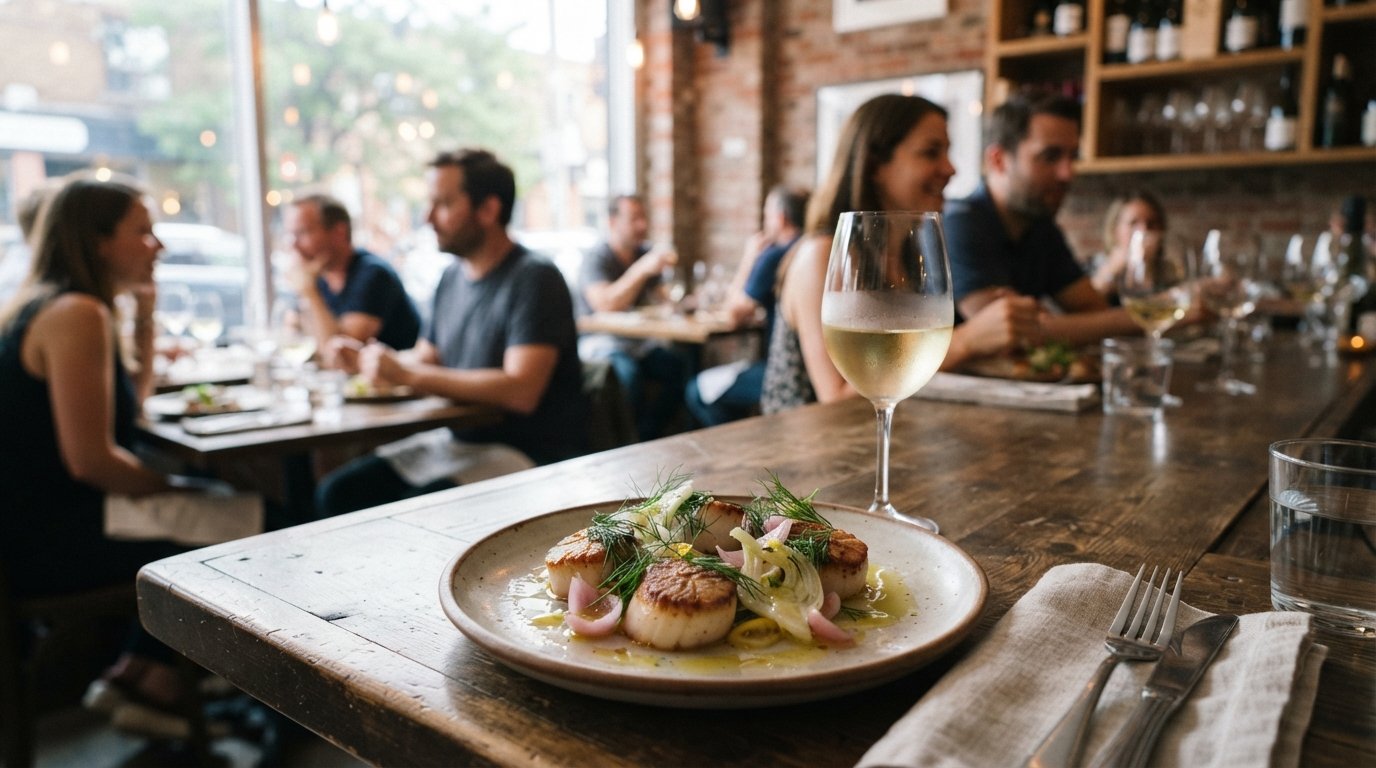
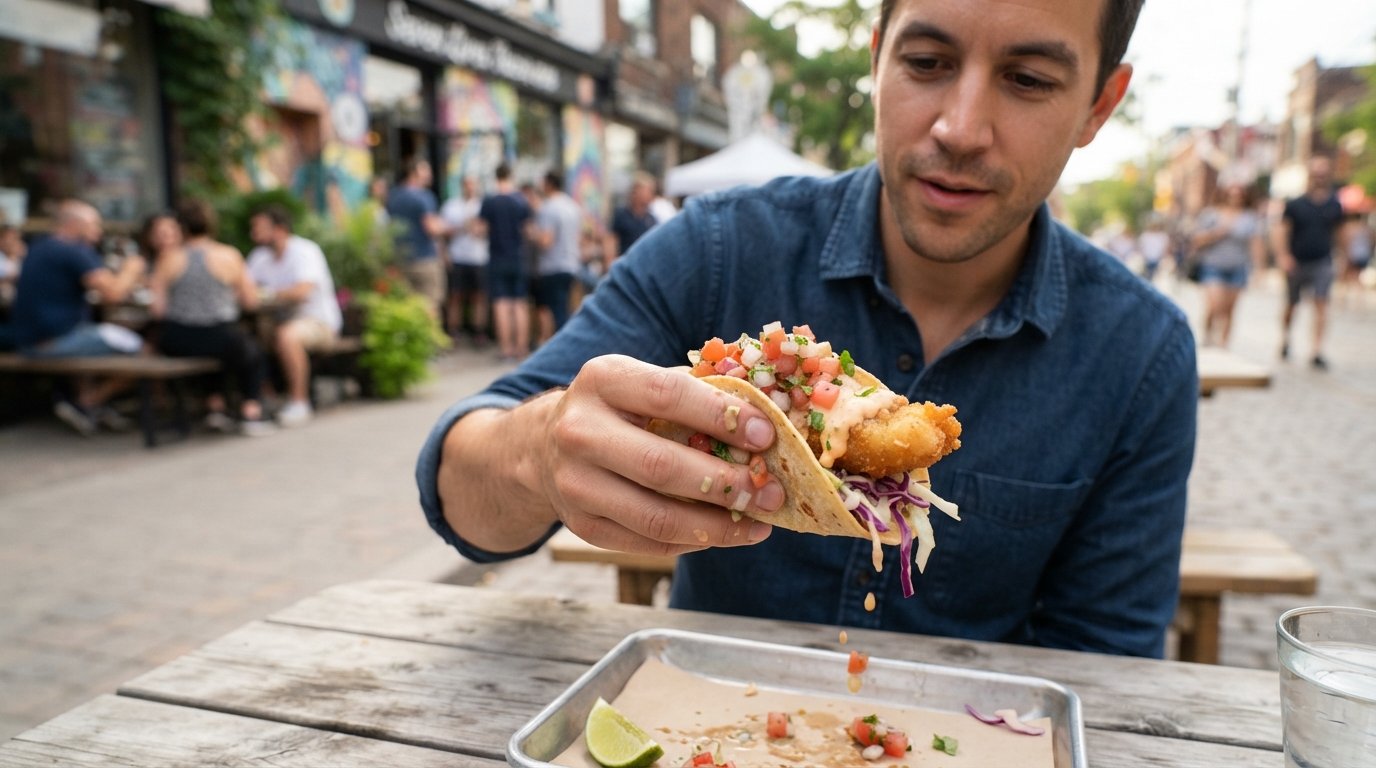
Then there are the counters, the places that make Kensington feel like a round-the-world crawl compressed into a few blocks. Seven Lives Tacos y Mariscos, at 69 Kensington Ave and going since 2012, is the legendary Baja stop. Order the Gobernador or the crispy mahi-mahi fish taco and eat it standing up if you have to; that’s part of the rhythm here. Jumbo Empanadas at 245 Augusta has been serving Chilean empanadas and humitas since it moved off a hot-dog cart into a dine-in room in 1999, and it still feels like one of the market’s most dependable anchors. Rasta Pasta at 61 Kensington keeps the fusion promise in the most practical way possible: jerk chicken with pasta, grilled paninis, and prices that don’t make you do math before ordering. Pow Wow Cafe at 213 Augusta, from Ojibway chef Shawn Adler, plates Indigenous Indian tacos on fried bannock, with hours that shift weekly, so it rewards the people who check ahead rather than gamble.
If you’re stocking up for a walk rather than sitting down, the market’s provisions are as important as its restaurants. Sanagan’s Meat Locker at 176 Baldwin is the chef-driven Ontario-farm butcher, the kind of place that reminds you Kensington still functions as a market, not just a dining strip. Global Cheese on Kensington is stacked with hard-to-find wheels and deli bits, and Blackbird Baking Company turns out the sourdough loaves and pastries that seem to disappear into backpacks before they’ve cooled. The best Kensington lunch is often not a lunch at all, but a slow loop of small things: a loaf, a wedge, a pastry, maybe a taco, maybe another.
Going out
At night, Kensington doesn’t so much switch personalities as lower its voice and pour a drink. The scene is casual, cheap and packed into the same small storefronts as the daytime businesses: dive bars, mezcal, craft beer, live jazz. It’s the kind of neighbourhood where bar-hopping is less about strategy than about not needing one.
El Rey Mezcal Bar, at 2a Kensington Ave, is the tiny warm-wood room that gets the tone exactly right. There’s a patio, a deep list of mezcals and tequilas, and Mexican small plates that make the whole place feel intimate without being fussy. Ronnie’s Local 069 at 69 Nassau St is the beloved no-nonsense dive — the one with the front patio that’s rammed the moment the sun comes out, the one where stallholders, bartenders and local hipsters end up shoulder to shoulder because nobody’s pretending to be elsewhere. Handlebar at 159 Augusta gives the cyclist’s-bar version of the same energy, with bicycles everywhere, local craft cans, cocktails and a street-side terrace usually ringed with bikes.
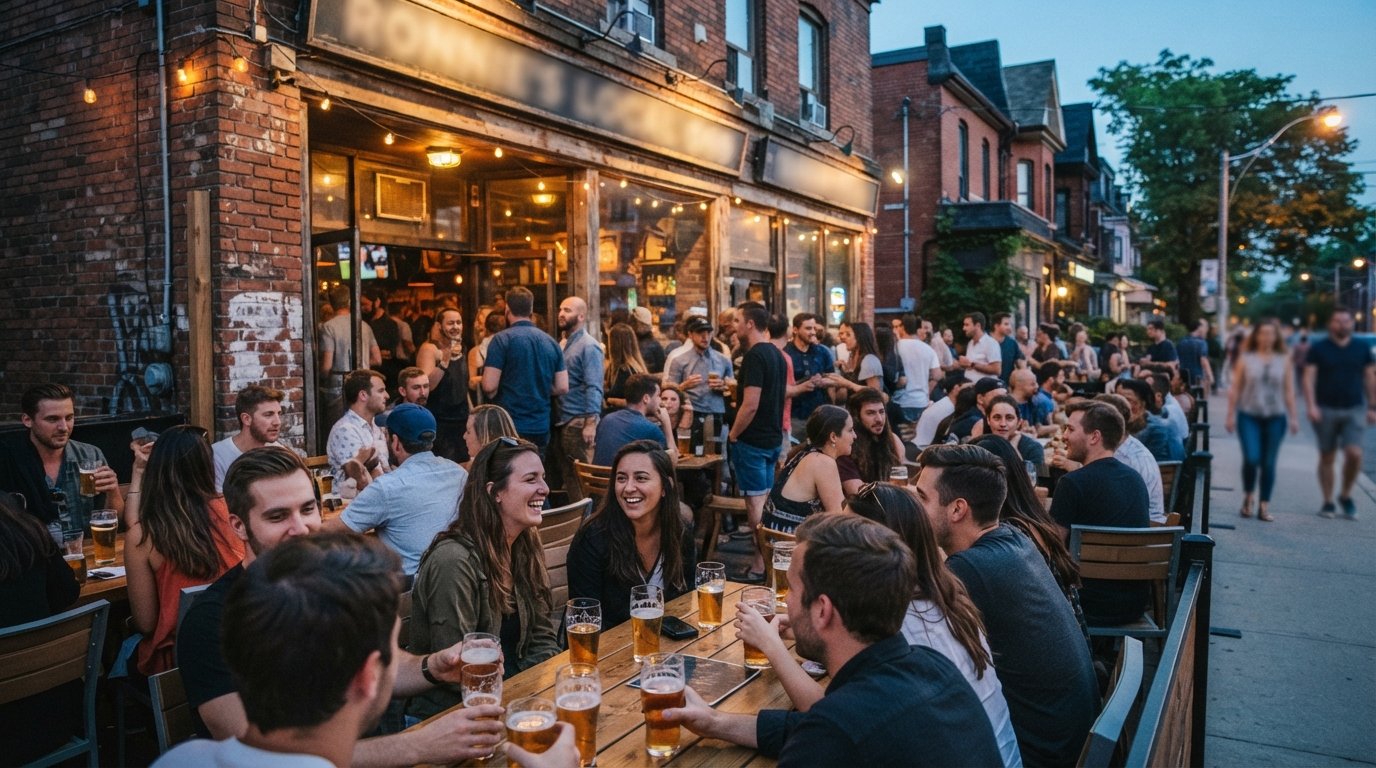
For beer, Kensington Brewing Company pours its own flights, while Burdock Kensington Tavern — Burdock’s brewery and tavern on Denison Square / 184 Augusta — pairs fresh beer with plates built on local meat and veg. Poetry Jazz Cafe at 224 Augusta is the more polished detour, a cozy cocktail room hung with photos of jazz greats and a back patio that hosts live music. If you want grungier, Thirsty & Miserable is the genuinely divey craft-beer bar wallpapered in punk memorabilia, and Supermarket flips from resto-bar to DJ club with open-mic nights at weekends. The point is that you can move from one mood to the next without ever leaving the four streets. Kensington doesn’t make nightlife into a destination; it lets it leak out of the same doors that sold you lunch.
Things to do / what to see
The best thing to do here is still the simplest: walk slowly and let the neighbourhood unfold at its own pace. Kensington is only about four streets across, which means you can cover the whole thing in an afternoon and still have enough left over to double back for whatever you missed the first time. The alleys off Augusta and Baldwin are where the street art really gathers, and half the shopfronts are covered in commissioned, consensual murals. The Garden Car on Kensington Avenue is the object everyone photographs: a decommissioned vehicle covered in murals, with a full garden growing out of it, parked there since 2007 and half-jokingly called Toronto’s smallest park.
Bellevue Square Park is where you pause when the blocks start to feel pleasantly busy. It’s the neighbourhood’s green heart, and on a summer day it can feel like a living room with better weather. Buskers set up around the edges, chess games appear from nowhere, and picnickers claim the benches while the Al Waxman statue looks on. If you time your visit for Pedestrian Sundays — the last Sunday of the month from roughly May to October — the whole thing changes character again. Cars are banned, the streets fill with drummers, dancers, buskers and pop-up vendors, and the market turns into a street party. The schedule can shift year to year, so it’s worth checking before you build a day around it, but when it lands, it’s one of the most vivid ways to see Kensington doing what it was always built to do.
Any day of the week, though, the market is its own attraction. Browsing the food and spice shops is the activity. The century-old produce stalls, Latin American grocers, Portuguese fishmongers and Chinese herb shops are the living market the neighbourhood is named for. And because Kensington bleeds straight into Chinatown on Spadina, you can walk from an empanada window to a dim-sum hall in five minutes, then keep going east if the Art Gallery of Ontario on Dundas is calling your name.
Don’t miss in Kensington Market
Bellevue Square Park for people-watching.
Pedestrian Sundays, when the streets are closed to cars.
The vintage clothing shops along Kensington Avenue.
Shopping & markets
Kensington is Toronto’s original thrifting and vintage district, and that title still fits because the old shops never really stopped being useful. Courage My Love at 14 Kensington Ave is the flagship, opened by two Toronto teachers in 1975 and marking 50 years in 2025. It’s a warren of vintage apparel that runs from Victorian to grunge, with beads, jewellery, oddities and homeware tucked into every spare corner. Exile on Kensington Avenue digs deeper into pre-loved womenswear, especially 60s–80s pieces, and the bargain basement adds the kind of treasure-hunt energy that makes people lose track of time. Tom’s Place is the family-run menswear institution, known for designer suits at low prices with in-house tailoring, while Bungalow deals in midcentury-modern clothing, Scandinavian furniture and retro homeware.
But the other half of Kensington shopping is food shopping, and that’s what keeps the place feeling like a market instead of a theme. The narrow streets are lined with independent grocers, Latin American and Caribbean spice shops, Portuguese fishmongers, Chinese herb sellers, cheesemongers like Global Cheese, the butcher Sanagan’s Meat Locker on Baldwin, and produce stalls that spill their crates onto the pavement. Bring cash. Many of the smallest, best stalls are cash-friendly and cheaper than a downtown supermarket, and the local way to shop here is the slow loop: a bag of spices here, a wheel of cheese there, maybe a pastry for the walk, then one more stop because the window was too tempting to ignore.
Where to stay in Kensington Market
Kensington is a place to spend the day and night, not the place to book your bed. There are essentially no hotels inside the market itself, which makes sense once you’ve spent an hour here: this is a residential-and-retail warren of Victorian houses and tiny shops, not a hotel district. Most travellers base themselves a short walk away and come in for the food, bars and shopping.
The easiest options sit just east and south. Chinatown on Spadina is a two-minute walk and gives you budget guesthouses plus quick access to more food. The Entertainment District and King West are a 10–15 minute walk or one streetcar stop away, with the bulk of downtown’s hotels. The University / AGO area around Dundas and McCaul also works well if you want to pair Kensington with a museum day. If you specifically want to roll out of bed into the market, look at short-term apartment rentals on or just off Augusta and Nassau rather than a hotel.
Where to stay here
Hotels in Kensington Market
Our best-rated stays in this neighbourhood. Prices are approximate “from” rates — confirmed at the provider when you continue. We may earn a commission if you book through our partners — at no extra cost to you.
 In this area
 In this area
Sheraton Centre Toronto Hotel
 In this area
 In this area
 In this area
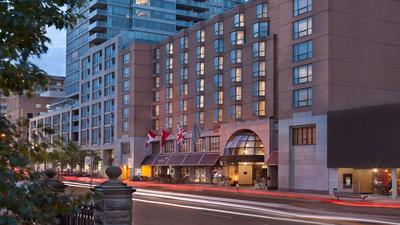
Toronto Marriott City Centre Hotel
 In this area
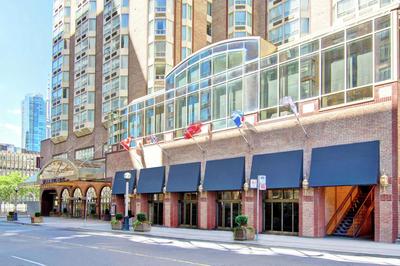
The Yorkville Royal Sonesta Hotel Toronto
 In this area
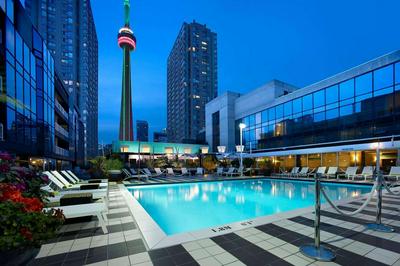
DoubleTree by Hilton Toronto Downtown
 In this area
Radisson Blu Toronto Downtown
 In this area
Kimpton Saint George Hotel by IHG
 In this area
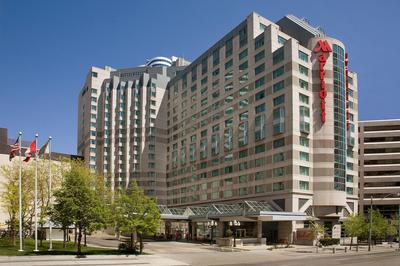
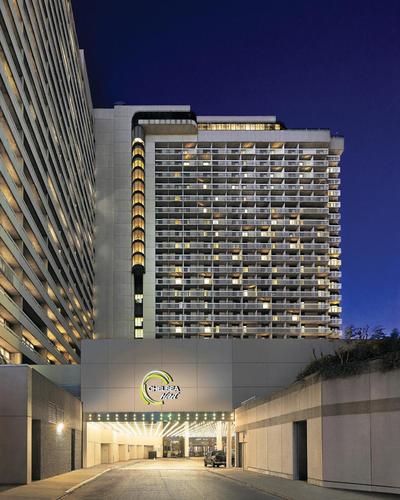
Marriott Downtown at CF Toronto Eaton Centre
 In this area
 In this area
InterContinental Toronto Centre by IHG
Getting around
Kensington is small, flat and entirely walkable. The whole market is about four streets, so once you arrive you go everywhere on foot. It sits just west of Spadina Avenue and just north of Dundas, with no streetcar running through its core, so you get off at the edge and walk in. That’s the whole trick here: don’t drive if you can help it. Parking is scarce and pricey, and on Pedestrian Sundays the streets are closed to cars entirely.
By TTC, the simplest approach is to take the subway to St. Patrick on Line 1, then the 505 Dundas streetcar west to Spadina and walk one block up to Kensington Avenue. You can also ride the 510 Spadina streetcar to the College or Dundas stop and walk two minutes west into the market. The 506 College streetcar from Queen’s Park station stops at College and Augusta, a four-minute walk to the north edge, and the 511 Bathurst streetcar covers the west side. From Union Station it’s roughly 15 minutes by streetcar; from Pearson Airport, take the UP Express to Union, then the subway and streetcar in, about 45–60 minutes all in.
What makes Kensington work is that it never asks you to rush. It’s a market, yes, but also a neighbourhood that still behaves like one: people linger, shopkeepers know their regulars, and the streets spill outward because the rooms inside are too small to contain everything. Come for lunch, stay for a drink, and you’ll understand why Toronto keeps trying to prettify places like this and always, somehow, misses the point.
Good to know
Kensington Market — your questions
Is Kensington Market a good area to stay in Toronto?
It’s brilliant for eating, drinking and shopping, but not really a place to sleep — there are almost no hotels inside the market. Most people book in nearby Chinatown, the Entertainment District or King West and walk over in a few minutes. If you want to stay right by it, short-term apartment rentals on Augusta or Nassau make more sense than a hotel.
Is Kensington Market safe?
Yes, for the most part. It’s busy, well-populated and lively into the evening, and it’s a normal, popular Toronto destination by day. Use the same common sense you would anywhere in a big city: keep an eye on your bag in crowds, stay aware after dark, and expect it to get boisterous late at night and on Pedestrian Sundays.
When are Pedestrian Sundays in Kensington Market?
They traditionally run on the last Sunday of the month from around May to October, when cars are banned and the streets fill with buskers, dancers and pop-up stalls. The schedule has shifted in recent years, so it’s smart to check the current calendar before planning your visit around one.
What is Kensington Market best known for?
It’s known for immigrant food, vintage and thrift shopping, and a deliberately scruffy street life that still feels local. The market’s history as Toronto’s Jewish Market also gives it a deep sense of continuity, even as the neighbourhood’s kitchens and shops keep changing.
Gallery