Toronto neighbourhood guide
Financial District, Toronto: glass towers, sky-high tables and the city’s most connected base
Toronto’s corporate core is polished, vertical and surprisingly practical — a district where Union Station, the PATH, landmark hotels and headline attractions all sit within a few walkable blocks.

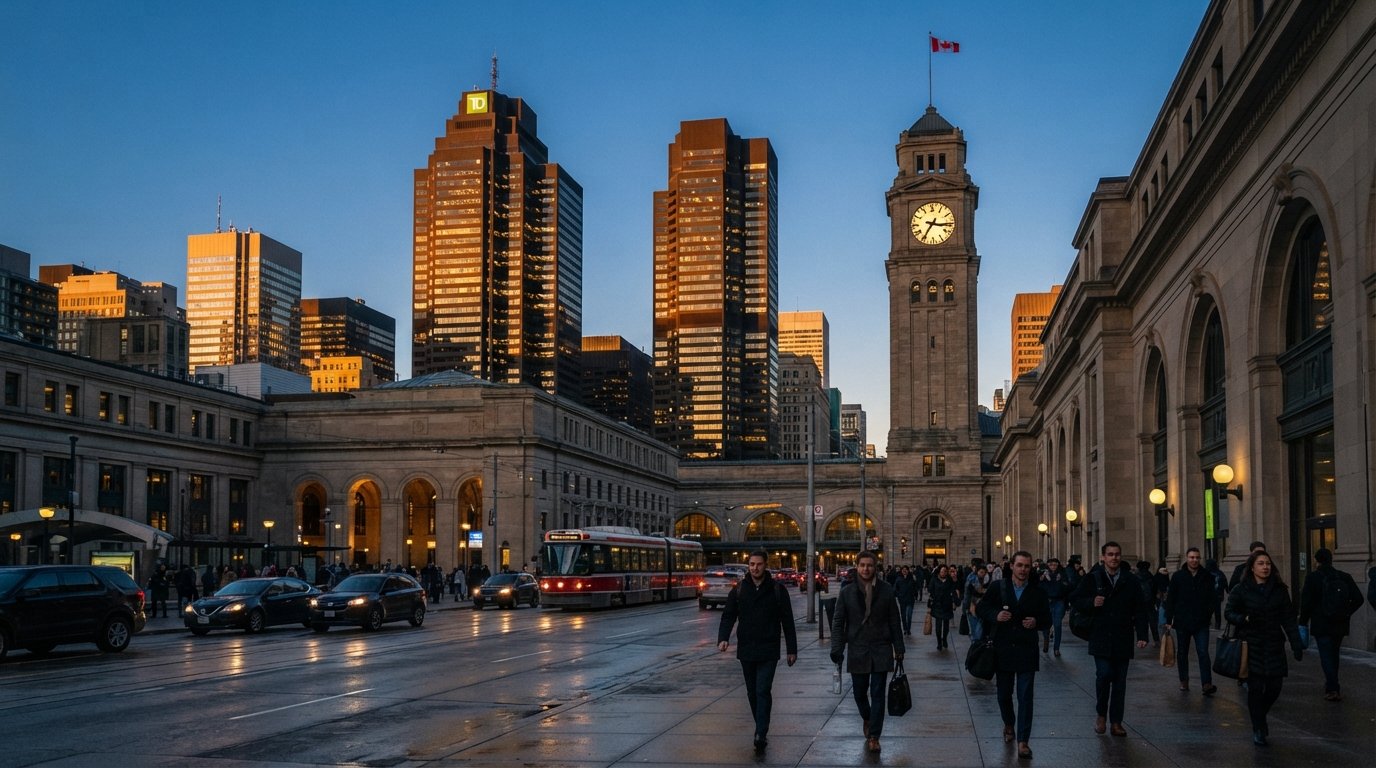
Bay Street at 8:30 a.m. has its own weather. Suits stream out of Union Station, coffee lines snake through First Canadian Place, and the towers catch the morning in hard, clean slices — black steel, gold glass, copper, white ribbed atriums. This is the Financial District, a small grid of Front, King, Yonge and York that somehow holds the densest cluster of high-rises in Canada, plus the kind of transit access that makes a car feel almost rude. The foot of the CN Tower is a five-minute walk south. The PATH runs beneath your shoes. And if you stay long enough, the district changes register after dark, trading weekday urgency for rooftop drinks, hotel bars and the low hum of arena traffic drifting toward the lake.
What the Financial District is known for
This is the money quarter — Toronto’s corporate heart, and by extension Canada’s. Bay Street has the same shorthand power here that Wall Street has in New York, and the skyline reads like a balance sheet in glass and stone: the black steel-and-bronze TD Centre by Mies van der Rohe, the gold-mirrored Royal Bank Plaza, First Canadian Place, Scotia Plaza and Commerce Court. It’s a district built to impress from a cab window and to function from inside a tie knot.
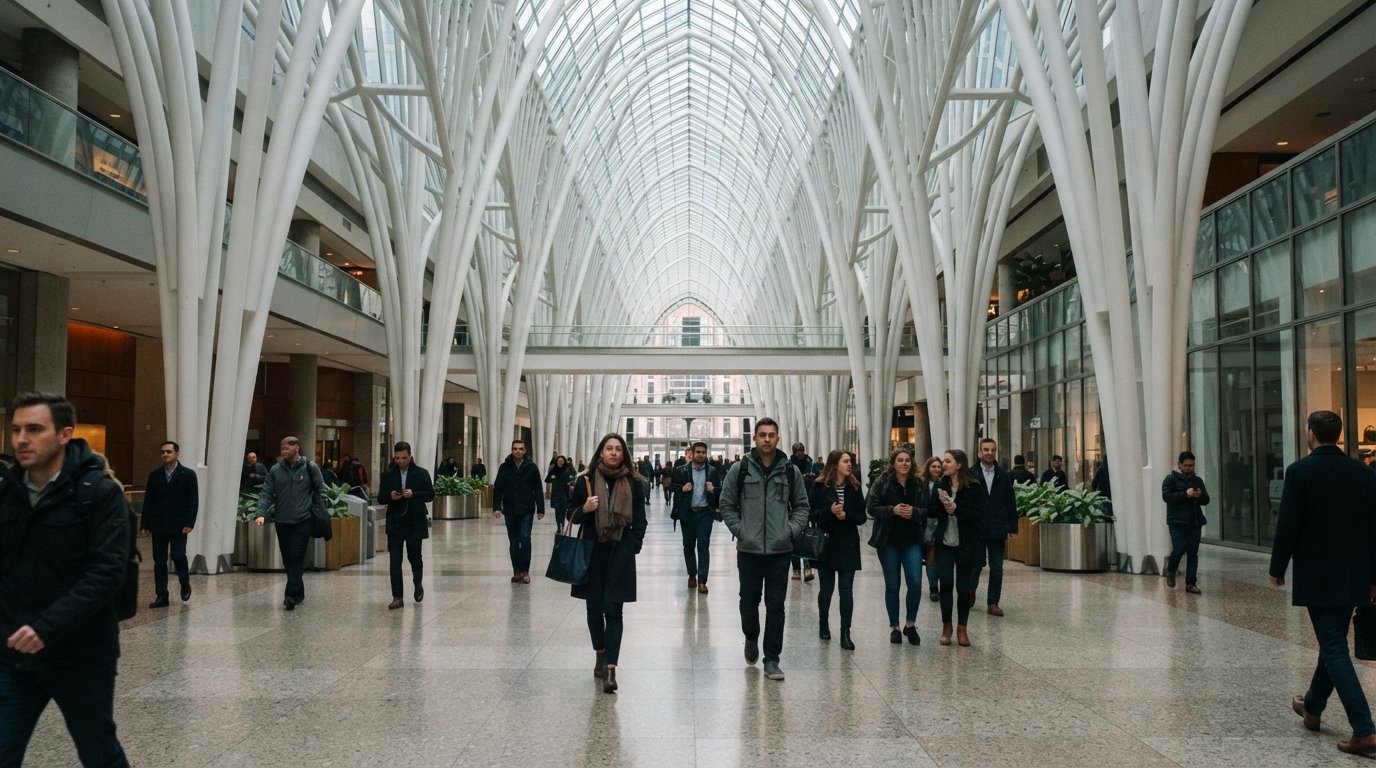
What makes it more than a row of towers is the way the architecture still performs. Brookfield Place on Bay Street is the showpiece, and the Allen Lambert Galleria inside it is the sort of space that makes even the most hardened commuter slow down. Santiago Calatrava’s white steel ribs arc overhead under a curving glass canopy, turning a passage between towers into something almost ceremonial. The nickname — the “crystal cathedral of commerce” — sounds like marketing until you stand there and look up.
Tucked into that same orbit is the Hockey Hall of Fame, housed in an opulent 1885 former Bank of Montreal branch. It’s one of those Toronto juxtapositions the city does so well: money turned into memory, a bank hall now safeguarding the original Stanley Cup. And then, just south, the district loosens its tie. The marquee attractions are really at the edge of the Financial District, a short walk toward the lake — the CN Tower, Ripley’s Aquarium of Canada, Rogers Centre and Scotiabank Arena — which means this neighbourhood is less a sealed-off business zone than a launch pad. You can sleep beside the towers and be under the tower, at the aquarium, or in an arena seat before the coffee cools.
Under it all runs the PATH, the underground pedestrian network that stretches for more than 30 kilometres. It’s part tunnel, part city, part winter survival strategy. In January, it lets you move from bed to boardroom to lunch without seeing daylight. That’s not romantic, exactly, but it is very Toronto: polished, efficient, and quietly built to keep the whole machine moving.
Where to eat & drink
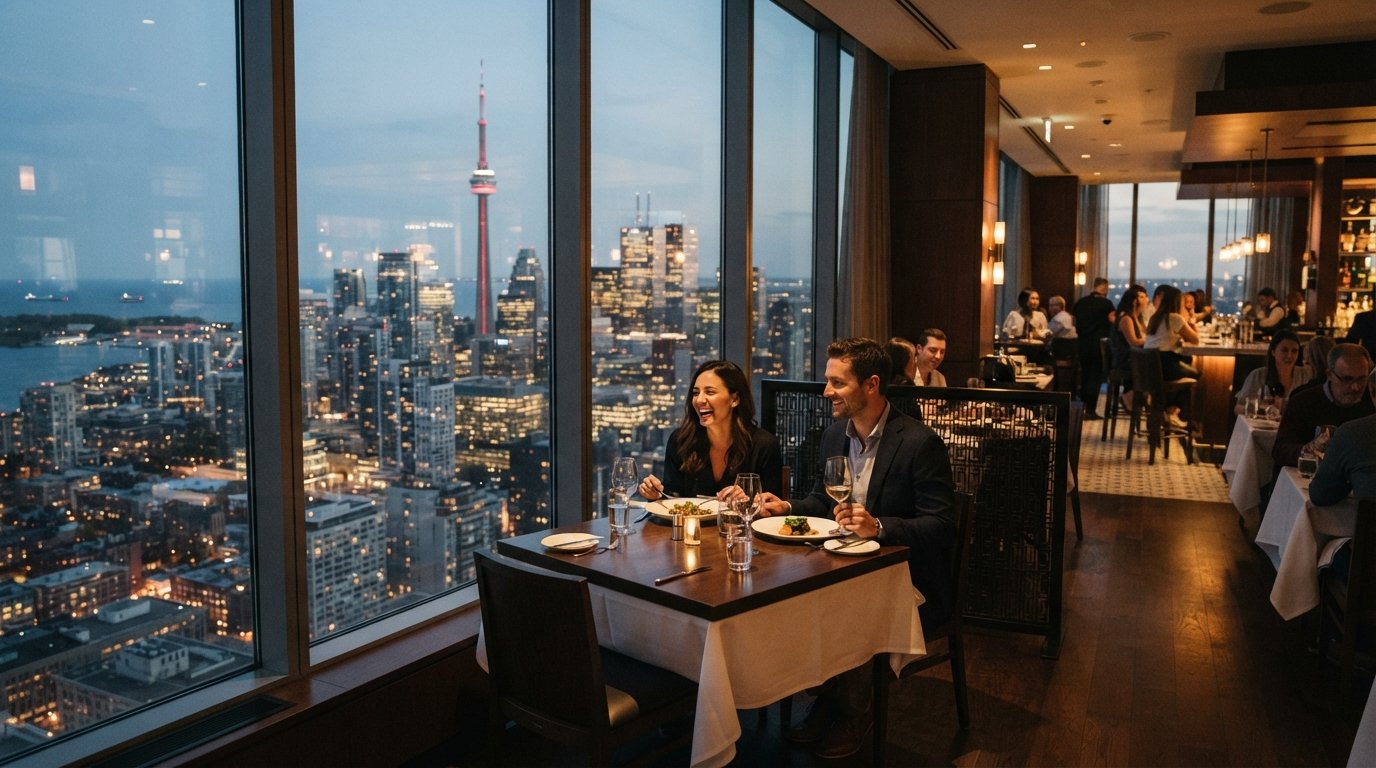
The Financial District’s signature move is dining in the sky. Canoe, on the 54th floor of the TD Bank Tower at 66 Wellington West, is the one you book when you want the city spread out below you like a map and the meal itself to feel like an occasion. Floor-to-ceiling windows take in the skyline and Lake Ontario, and the kitchen leans contemporary Canadian, with scallops and seasonal tasting menus doing the heavy lifting. It’s been a benchmark for nearly 30 years and carries a Michelin recommendation, which tells you all you need to know about how seriously Toronto still takes a room with a view.
For a different kind of precision, Restaurant 20 Victoria is one of those tiny downtown rooms that rewards attention. It’s a Michelin-starred seafood tasting-menu restaurant on Victoria Street, no tipping, with the room and bar facing the open kitchen. The scale is intimate, the mood restrained, and the whole thing feels like a quiet correction to the district’s more performative luxury. If Canoe is the skyline statement, 20 Victoria is the whispered flex.
Brookfield Place has its own glossy counterpoint in Chotto Matte, where Japanese-Peruvian Nikkei plates and cocktails bring a little theatre to the galleria. It’s the sort of place that makes sense in this part of town: polished, central, and built for people who want dinner to slide seamlessly into a second drink without changing buildings.
For lunch that still feels like a break from the spreadsheet, La Bettola di Terroni is the dependable Italian answer in the district core. It’s the kind of place that earns its keep by showing up the same way every day, while Sud Forno covers the equally useful all-day Italian lane when you need something straightforward and good without a reservation hanging over your head.
And then there’s REIGN at the Fairmont Royal York, the grand old-room version of downtown dining — Ontario-sourced, polished, and very much in conversation with the hotel around it. It’s not trying to be casual. It doesn’t need to be.
Going out
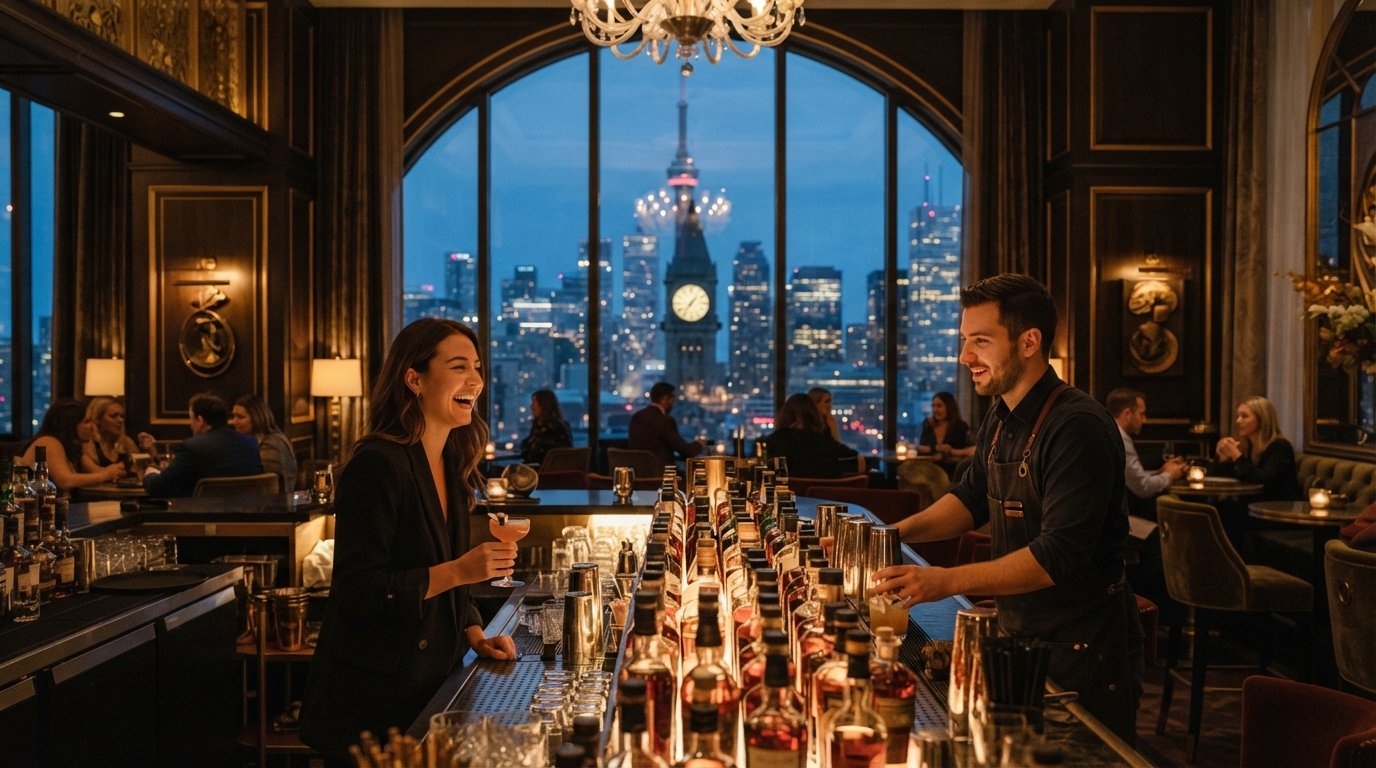
Nightlife here is polished rather than sweaty. Nobody comes to the Financial District hunting for a late club crawl; they come for the view, the hotel bar, the terrace, the easy transition from dinner to one more drink. LOUIX LOUIS at the St. Regis is the clearest expression of that mood. On the 31st floor, it pairs skyline views with French-inspired plates and one of North America’s deepest brown-spirits collections. The room has that high-gloss confidence you only get when a bar knows exactly how far above the street it sits.
The Chase takes a different angle, literally and temperamentally. Up on the historic Dineen Building, its rooftop terrace is the warm-weather sundowner spot, with a 75-seat patio that fills fast when the weather turns kind. The lower-floor sibling, The Chase Fish & Oyster, gives you a more casual raw-bar version of the same address, but it’s the terrace that belongs in the evening imagination of this district.
At the Ritz-Carlton, DEQ Terrace & Lounge pulls a well-heeled crowd for cocktails and small plates, both indoors and out. That’s the pattern here: hotel bars, rooftop terraces, and places where the room itself is part of the draw. If you want a louder night, King Street West between University and Spadina is a short walk away and does the heavy lifting for see-and-be-seen restaurant-bars and lounges. And on game or concert nights, the bars around Scotiabank Arena and down toward the waterfront fill up fast on either side of the event, which gives the district a brief, kinetic pulse before it settles back down.
Things to do / what to see
If you only do one thing here, make it the CN Tower. It’s the icon for a reason, a two-minute walk south of the office towers and still the easiest way to understand the district’s scale from above. The observation decks, the glass floor and the revolving 360 Restaurant are all part of the package, but the real drama is simply the height and the sweep of the view. Every city has a landmark; not every city lets you walk to it between meetings.
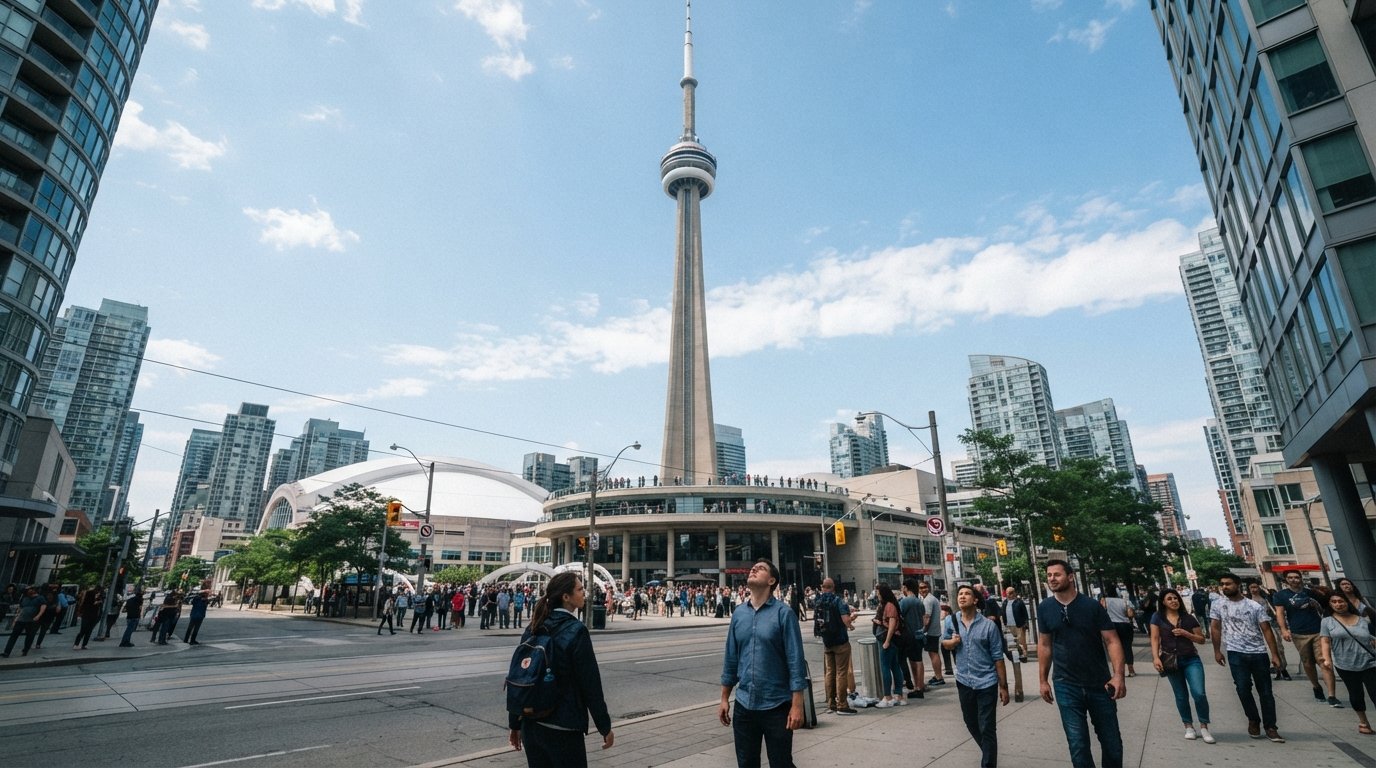
If you’re after something more adrenaline-forward, EdgeWalk takes that same tower and flips the experience outward. The hands-free, harnessed circuit runs around the outside of the main pod, 356 metres up, and costs around CA$200 and up. It’s seasonal, and good-weather slots sell out, which feels appropriate for a thing that asks you to step outside a tower on purpose.
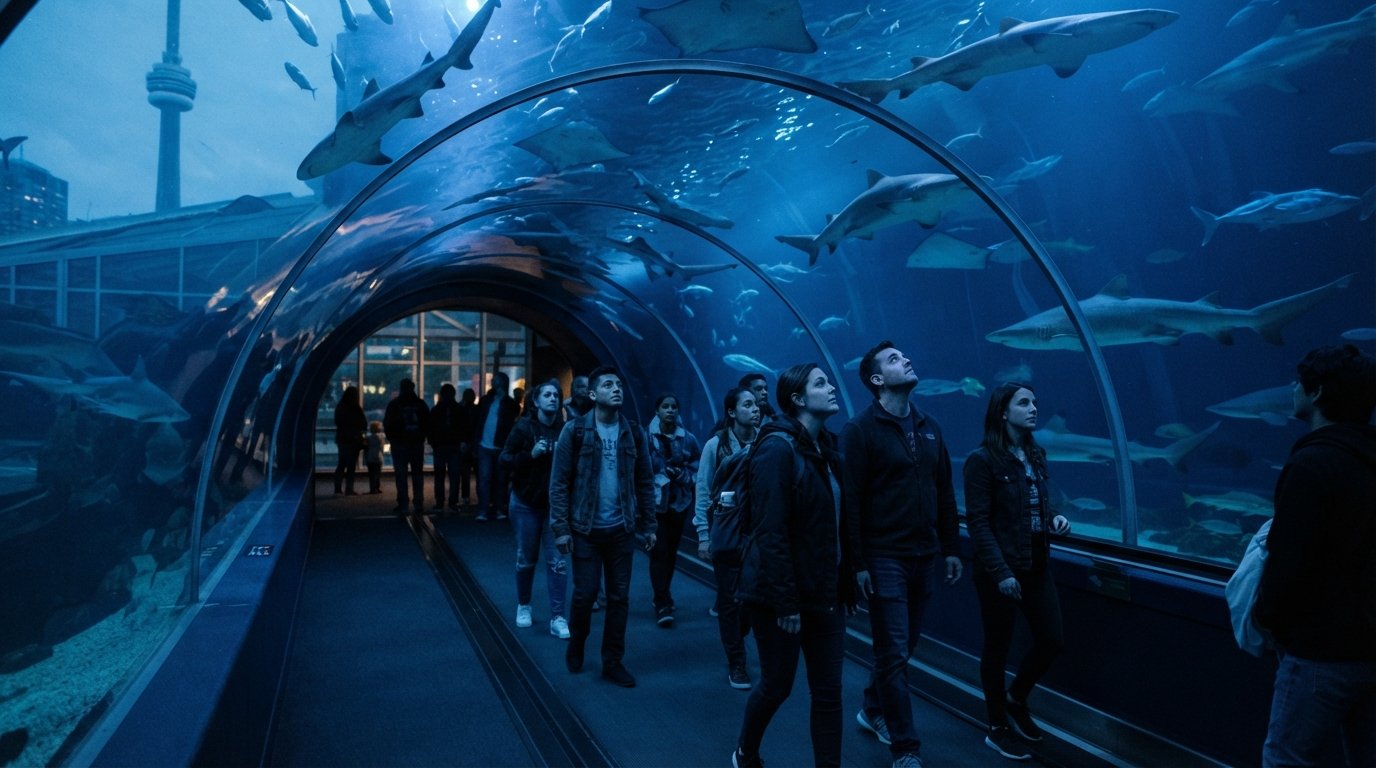
At the tower’s base, Ripley’s Aquarium of Canada is the reliable rainy-day move, open daily from 9am to 9pm. The moving-sidewalk shark tunnel is exactly the kind of attraction that works for families, travellers with time to kill, and anyone who wants to go from glass towers to glass tanks without leaving the neighbourhood.
Sports and concert fans are spoiled for proximity. Rogers Centre sits beside the CN Tower for Blue Jays games and major shows, while Scotiabank Arena on Bay Street handles the Maple Leafs, Raptors and touring concerts. On event nights, the whole southern edge of the district starts to feel like a funnel, with people moving toward the same few doors and the same bright pockets of energy.
For a free architectural detour, Brookfield Place is one of the best places to wander without a plan. Stand under the Allen Lambert Galleria, then dip into the Hockey Hall of Fame in the old bank hall beneath it. The whole sequence — atrium, heritage bank, hockey shrine — captures the district’s personality better than any slogan could. Architecture buffs can also self-tour the black towers of the TD Centre and the gold-glass Royal Bank Plaza, which are less about a single spectacle than about the cumulative effect of walking through a district that was designed to project power.
And if the weather turns, the PATH becomes the attraction. It’s a Guinness-record underground city of shops and food courts, and the simple act of walking it can feel like discovering a parallel Toronto under the one everyone sees from the street.
Don’t miss in Financial District
The soaring, white-canopied Allen Lambert Galleria in Brookfield Place.
The historic design exhibits at the Design Exchange.
The underground PATH network.
Shopping
Shopping here is mostly underground and inside the towers, which is to say it’s practical before it’s pretty. The PATH links food courts and retail concourses beneath First Canadian Place, Brookfield Place, Scotia Plaza and the TD Centre. It’s not where you go for a browse with a latte; it’s where you go because you need to buy something, eat something, or avoid the weather without leaving the district.
Brookfield Place and the concourse levels hold the office crowd’s usual ecosystem of chains, cafés and services. That’s the rhythm of this neighbourhood: utilitarian by design, but so central that even its convenience feels useful in a grander sense. For real retail, walk a few minutes north to CF Toronto Eaton Centre, the huge downtown mall spanning Yonge Street from Queen to Dundas. It has its own glass galleria and hundreds of stores, and it pulls the district into the wider downtown shopping pattern.
Yonge Street, the district’s eastern edge, runs north into that shopping stretch, which means you can move from the corporate core into a more conventional retail corridor without changing your route much at all. For food shopping, though, the best detour is the St. Lawrence Market, a ten-to-fifteen-minute walk east. Browse the historic South building for cheese, seafood and the city’s famous peameal-bacon sandwiches, and remember that it’s closed Mondays. That’s the kind of errand that turns a stay here from efficient to genuinely pleasant.
Where to stay in the Financial District
This is Toronto’s most central and best-connected place to sleep, and also its priciest. The landmark is the Fairmont Royal York at 100 Front West, the châteauesque grande dame directly across from Union Station. If you’re arriving by train or planning to use the UP Express, it’s hard to imagine a more convenient address.
The St. Regis at 325 Bay Street is the sleek modern-luxury option, with LOUIX LOUIS and the Astor Lounge sabering ritual on its higher floors. The Ritz-Carlton at 181 Wellington West sits on the district’s western edge toward the Entertainment District and comes with some of the largest rooms in the city plus lake-facing views. These are not bargain beds, and they’re not meant to be.
Practically, the sweet spot is the blocks around Front and Wellington: closest to Union Station, the CN Tower, Ripley’s and the waterfront, and plugged straight into the PATH so you can reach half the district without a coat. Rooms near the arenas book out and cost more on game and concert nights. Weekends are quieter and can be cheaper here than in busier neighbourhoods, since the office crowd empties out — a real advantage if you want a central base without the noise of a more residential district.
Where to stay here
Hotels in Financial District
Our best-rated stays in this neighbourhood. Prices are approximate “from” rates — confirmed at the provider when you continue. We may earn a commission if you book through our partners — at no extra cost to you.
 In this area
 In this area
Sheraton Centre Toronto Hotel
 In this area
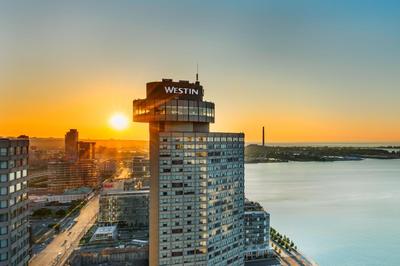
The Westin Harbour Castle, Toronto
 In this area
 In this area
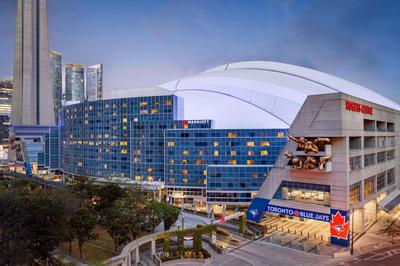
Toronto Marriott City Centre Hotel
 In this area
DoubleTree by Hilton Toronto Downtown
 In this area
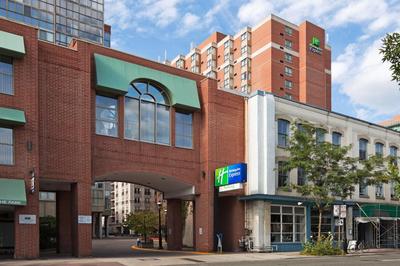
Holiday Inn Express Toronto Downtown by IHG
 In this area
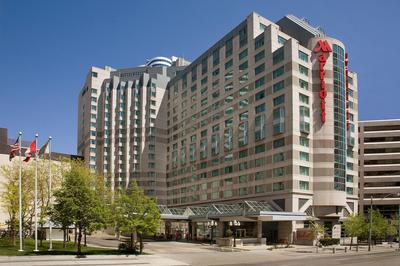
Marriott Downtown at CF Toronto Eaton Centre
 In this area
 In this area
 In this area
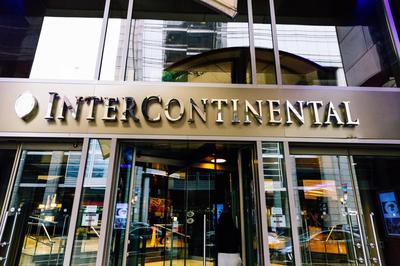
InterContinental Toronto Centre by IHG
 In this area
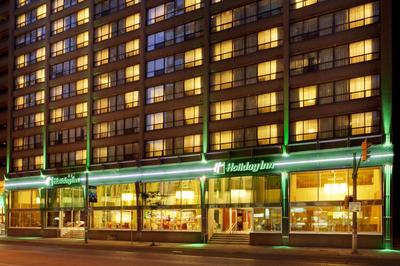
Holiday Inn Toronto Downtown Centre by IHG
Getting around
You barely need transit inside the Financial District. It’s flat, dense and walkable, and the PATH connects almost everything underground when the weather turns cold or wet. Union Station is the southern anchor and the hub for everything: TTC Line 1, GO Transit regional trains and buses, and the streetcar network. King and St. Andrew stations also serve the core, but Union is the one that makes the whole district click.
The UP Express runs from Union straight to Pearson Airport in about 28 minutes, every 15 minutes, for roughly CA$12.35 one-way, cheaper with a PRESTO card. That’s one of the easiest airport links in North America, and it’s a big part of why the district works so well as a base.
From here, the whole downtown is on foot. The CN Tower and Ripley’s are about five minutes south, the Distillery District and St. Lawrence Market are ten to fifteen minutes east, and Yorkville is a straight subway ride north on Line 1. Billy Bishop city-centre airport is a short cab or ferry-shuttle hop from the waterfront. For most visitors, a PRESTO card or contactless tap plus your own two feet covers everything.
The Financial District is not the place to come for neighbourhood texture in the residential sense. It’s the place to come if you want Toronto compressed into a few efficient blocks: the towers, the transit, the landmark hotel rooms, the sky-high meal, the arena night, the underground winter city. It’s corporate, yes, but also unusually legible. Once you know the grid, you know how to move through the whole downtown.
Good to know
Financial District — your questions
Is the Financial District a good area to stay in Toronto?
Yes, if you want to be central and superbly connected. It’s close to Union Station, the CN Tower, Ripley’s Aquarium and the waterfront, and the PATH makes cold-weather walking easy. The trade-offs are cost and quiet: it’s Toronto’s priciest hotel cluster, and weekends can feel subdued once the offices empty.
Is the Financial District safe at night?
Broadly yes. It’s one of downtown Toronto’s safest, busiest areas by day and around the hotels and arenas at night. Some side streets empty out after work, so it can feel deserted rather than dangerous. Stick to main routes, especially late, and remember the PATH partly closes overnight.
How do I get from Pearson Airport to the Financial District?
Take the UP Express from Pearson to Union Station — about 28 minutes, with trains every 15 minutes and fares around CA$12.35 one-way, less with PRESTO. Union Station sits right in the district, so most hotels are a short walk or one subway stop away.
What is the Financial District best for?
Skyline views, sky-high dining, major attractions, and easy transit. It’s especially good for first-time visitors, business travellers, sports and concert fans, and anyone who wants to be within walking distance of the CN Tower, Ripley’s, Union Station and the waterfront.
Gallery