Speciale Toronto
Torri e tunnel del Financial District di Toronto a ottobre
Una passeggiata gratuita di otto isolati tra le torri bancarie di Bay Street, le sale bancarie in cui a volte si riesce a entrare e i tunnel del PATH che rendono tutto possibile sotto la pioggia d'ottobre.

Di Robin KellerToronto on foot, neighbourhood by neighbourhood
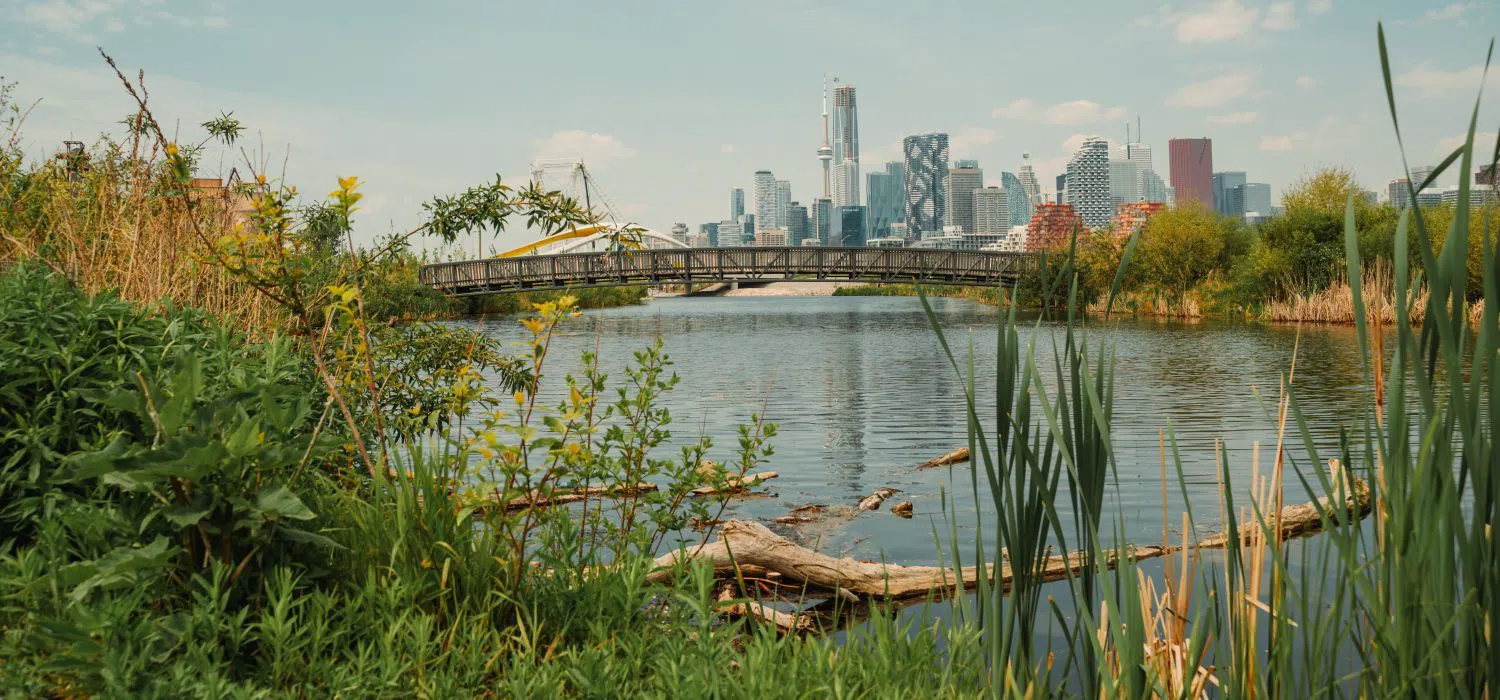
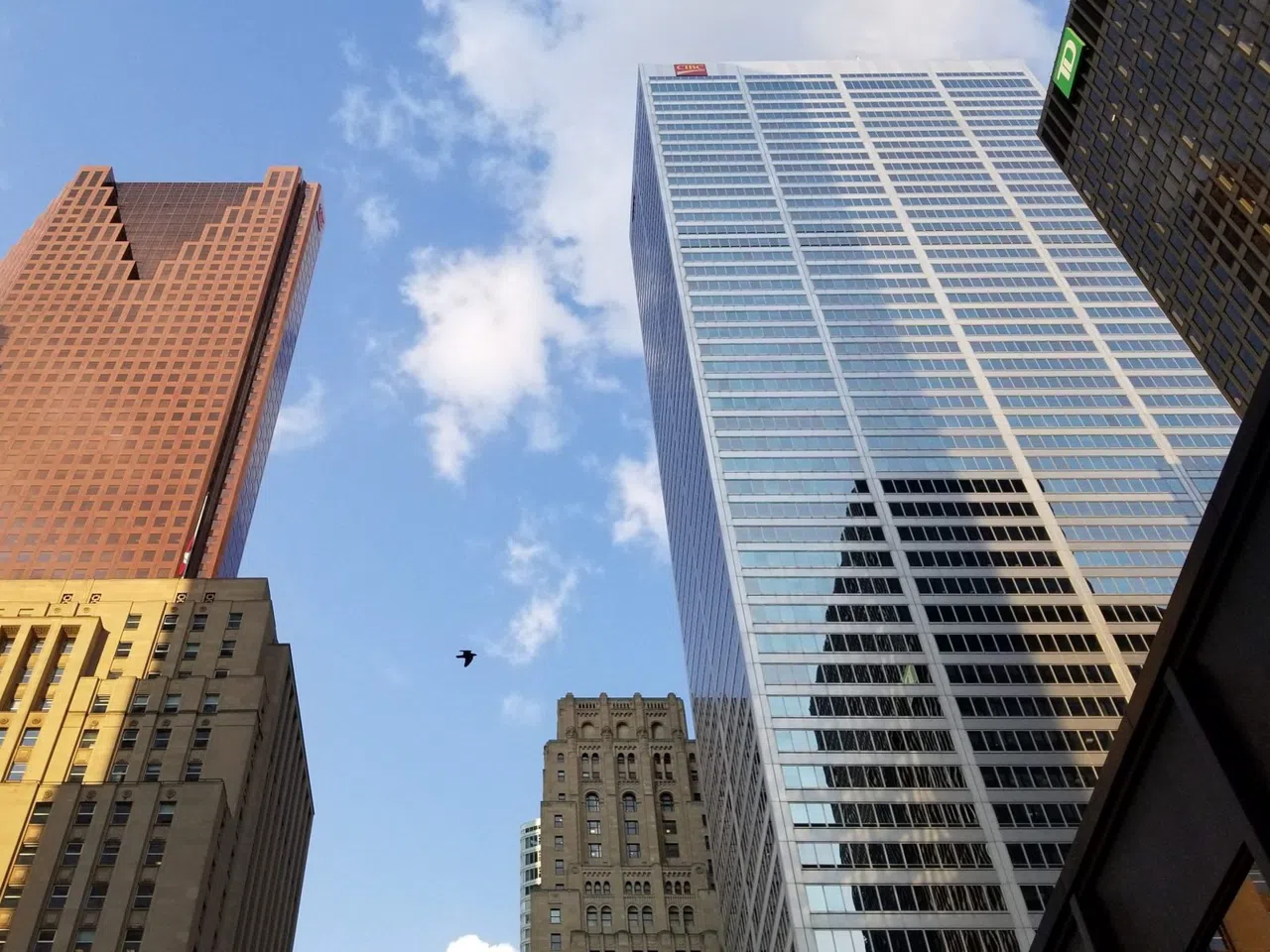
The Financial District is eight blocks that pay you back for looking up, and nearly all of it costs nothing. Between Bay and King the banks built in black steel, bronze-tinted glass and cut stone, close enough together that you can read fifty years of Canadian money from one street corner. These are working offices rather than attractions, so there is no ticket, no queue and no opening hour to organise your morning around. October changes two things. The low afternoon light does something to the glass that July does not, and when the rain comes in off the lake there is a second district running under your feet.
Eight blocks and what you are looking at
The Toronto Financial District (the downtown core, broadly Bay and King) has more free, walk-in architecture packed into a few streets than anywhere else in the city. You are looking at four bank headquarters built in sequence rather than a planned ensemble, so the interest is in the arguments between them: a 1930s limestone tower that announced the banks had arrived, the black steel grid that answered it four decades later, the gold-tinted glass across the street that answered that. It reads on foot and badly from a bus, because what matters is the scale change at pavement level, how a thirty-storey wall meets a four-metre doorway.
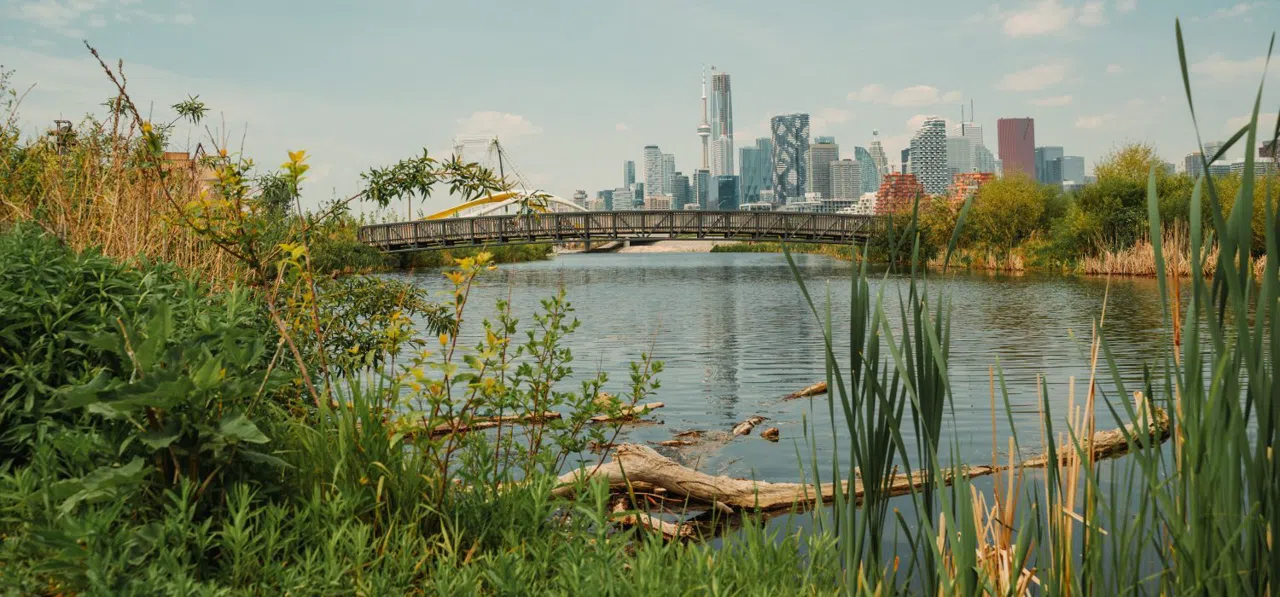
Figure on two to three hours of walking for the loop below, or a comfortable half day if you stop for the museum, a coffee and the market at the end. There is no door policy and no booking: these are public streets. The one practical constraint is width. The pavements on King between Yonge and University are narrow, and guided groups here are usually held to fifteen or twenty-five people for that reason. If you are walking with a party larger than that, split it.
Organizza il tuo viaggio a Toronto
Prezzi in tempo reale dai nostri partner di prenotazione.
Cancellazione gratuita su molte camere. Potremmo ricevere una commissione quando prenoti.
Start at Union Station and give it fifteen minutes
Most visitors arrive at Union Station (Front Street at Bay) whether they mean to or not. It is the subway interchange, the commuter rail hub and the end of the airport train. It is also a 1920s beaux-arts hall with a ceiling worth standing still under, and almost everyone walks straight through it. Give it a quarter of an hour. It is free and open daily from roughly 5.30am to 12.45am, the lower food hall does lunch from about C$12, and if you are meeting people, assemble at the edge of the Great Hall rather than mid-floor. Commuters move through the middle at speed and will simply go around you, loudly.
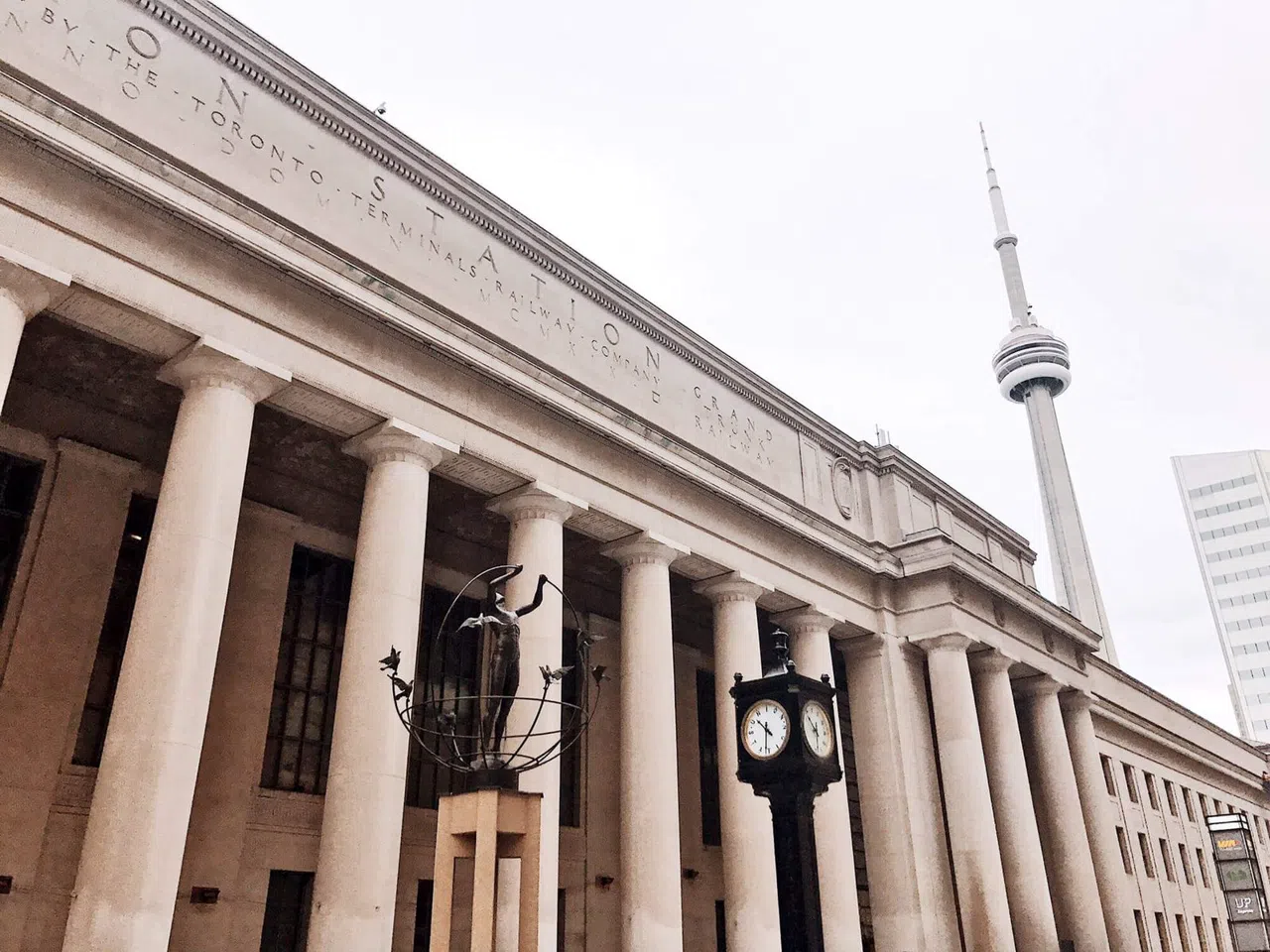
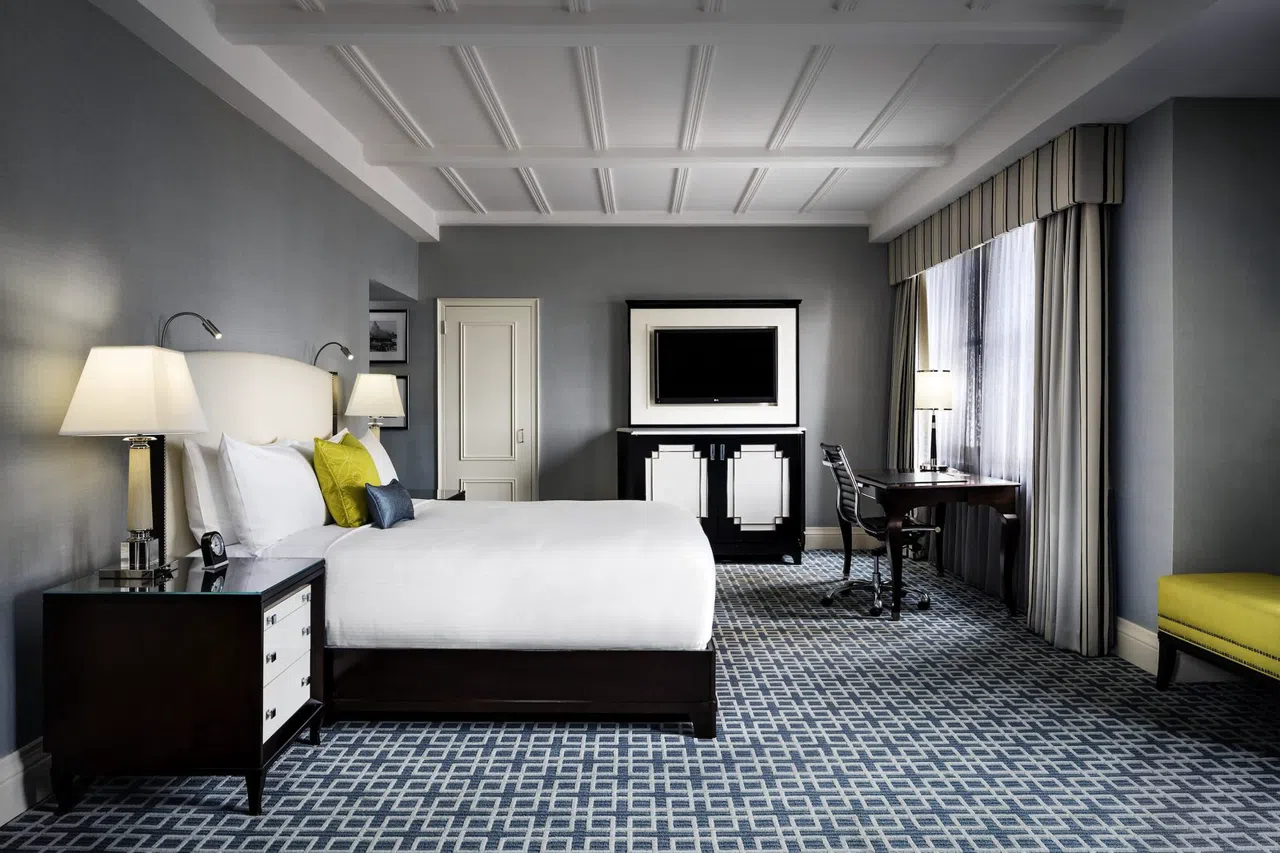
Cross Front Street to the Fairmont Royal York (Front Street, directly opposite Union) and walk through the lobby, which anyone may do. This was the railway hotel the station was built to feed in 1929, and the two make sense as a pair. The Library Bar opens daily from noon, with cocktails around C$20 to C$26, and it refreshed its menu in autumn 2026, so it is not simply trading on the panelling. Afternoon tea runs at CLOCKWORK on Saturdays and Sundays from noon to 3pm by reservation, roughly C$75 to C$95 a head; a group of any size needs to book that well ahead. On a wet October afternoon the lobby is the most comfortable shelter on the route.
North up Bay to the banking halls
Walk north on Bay. Five minutes gets you to King Street and Commerce Court North (King at Bay), which was the tallest building in the British Empire for thirty years and still has the grandest interior on this walk: a vaulted, coffered banking hall that belongs to a more confident era of cheque-writing. Treat it as a lobby you are being allowed into, not a venue. There is no ticket and nothing to book, access is weekday business hours and entirely at building security's discretion, and you should keep your group small, quiet and brief. If you are leading other people, do not promise them they will get in.
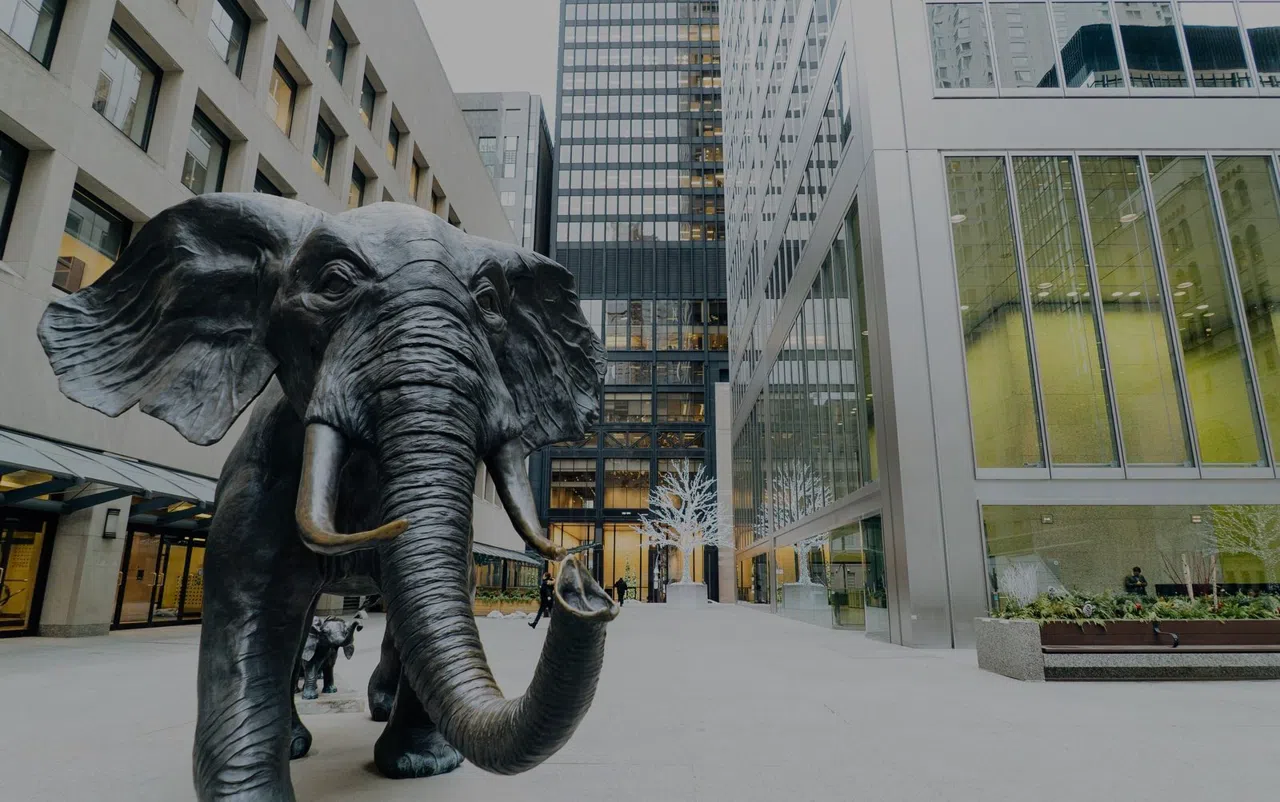
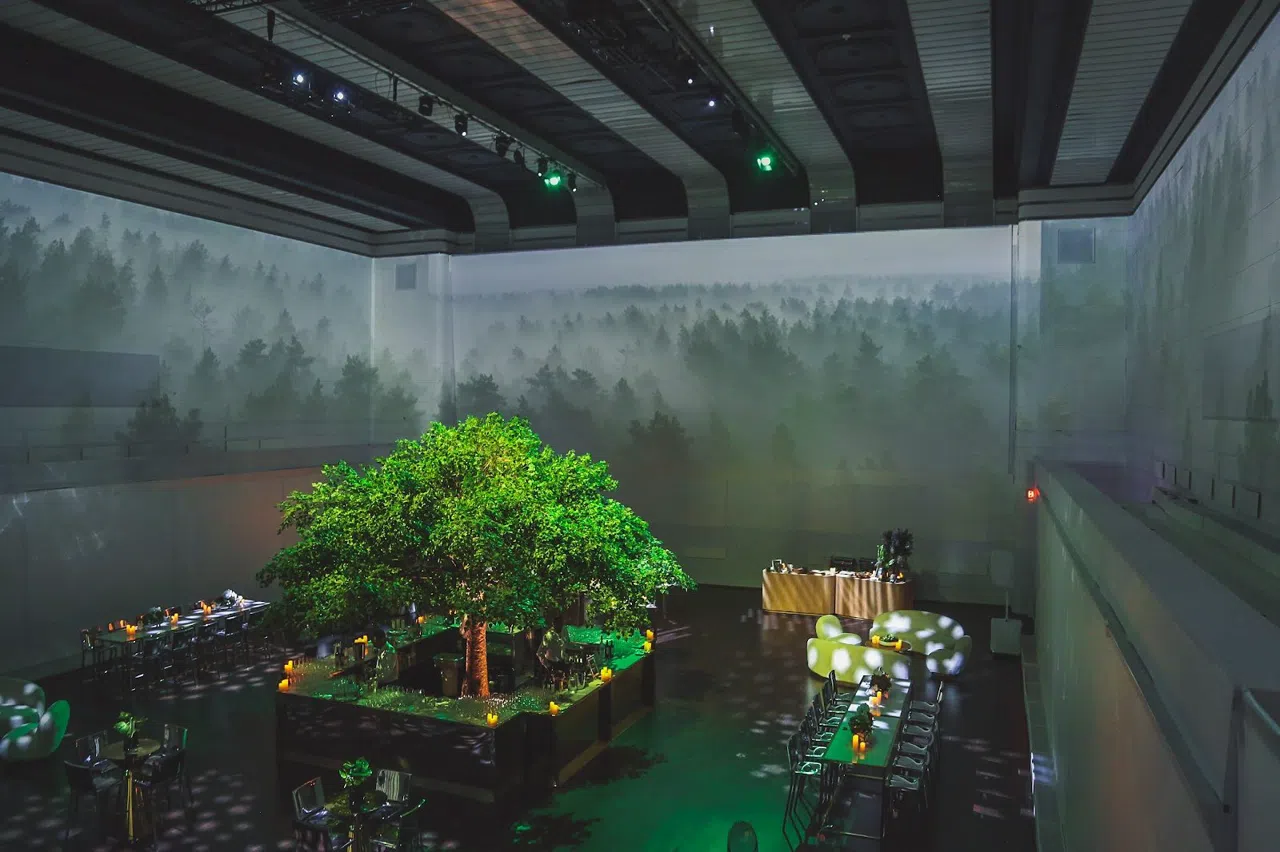
A minute away is the Design Exchange (the old Toronto Stock Exchange building, 234 Bay). The interior is now a private, bookable event space rather than a drop-in design museum, so unless an event happens to be open to you, this is an exterior stop, which is fine, because the reason to come is on the street anyway. Charles Comfort's 1937 stone frieze runs across the facade and shows a procession of top-hatted figures with a worker's pocket being picked. It is one of the few moments where the district openly mocks itself, and you can stand on the pavement and read it for nothing.
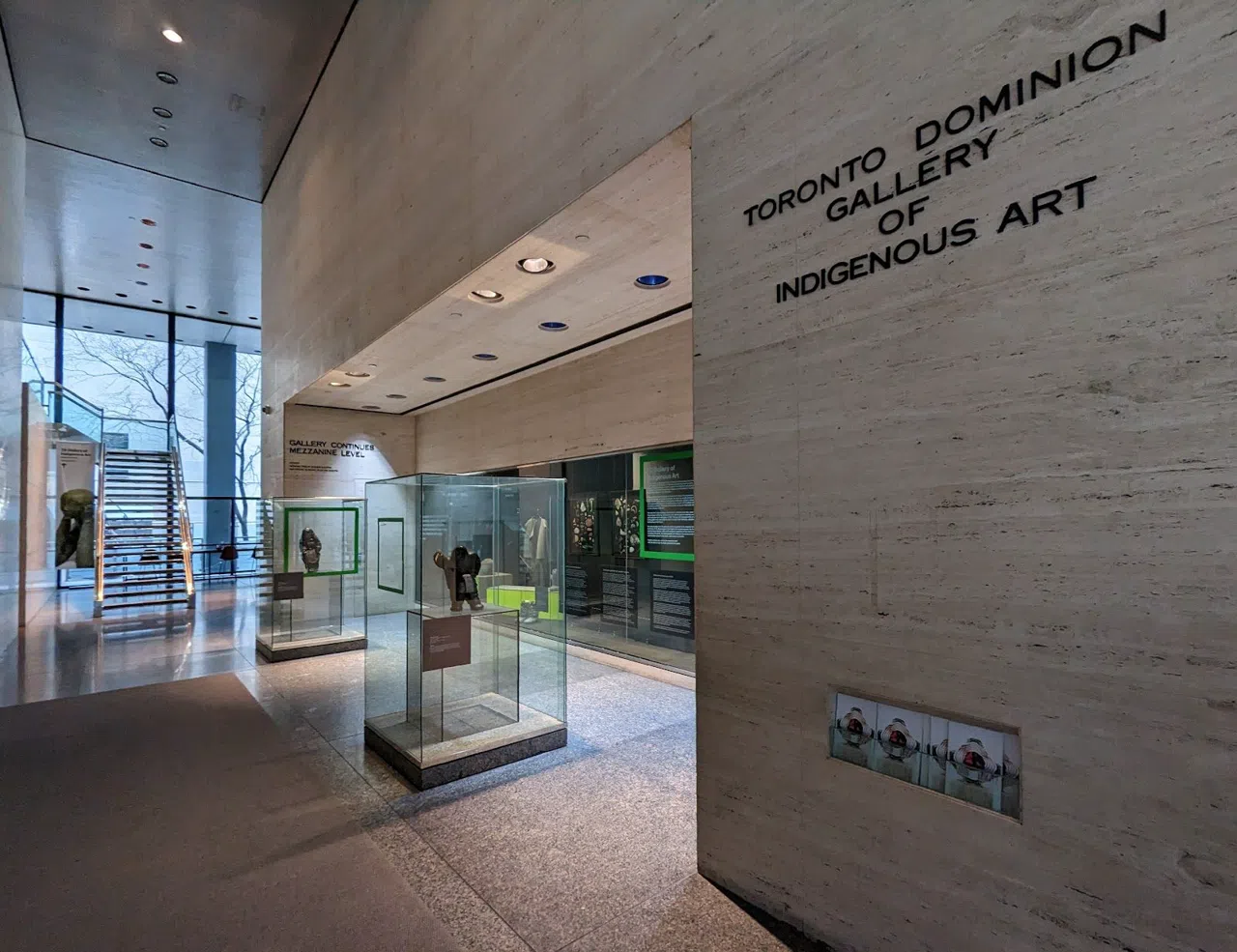
South-west, inside the black towers of the TD Centre on Wellington West, the TD Gallery of Indigenous Art is a single compact room of Arctic sculpture at a standard most paid museums would advertise. It is free, walk-in, no booking, and fifteen quiet minutes is the right length. Two caveats: it was renamed from the TD Gallery of Inuit Art, so older signage and guidebooks will not match, and the space is not fully accessible. Because the room is small, a party of more than about ten should filter in a few at a time rather than arrive as a block. It opens at weekends, which matters in a district where most things do not.
Brookfield Place, Calatrava's canopy and the Cup
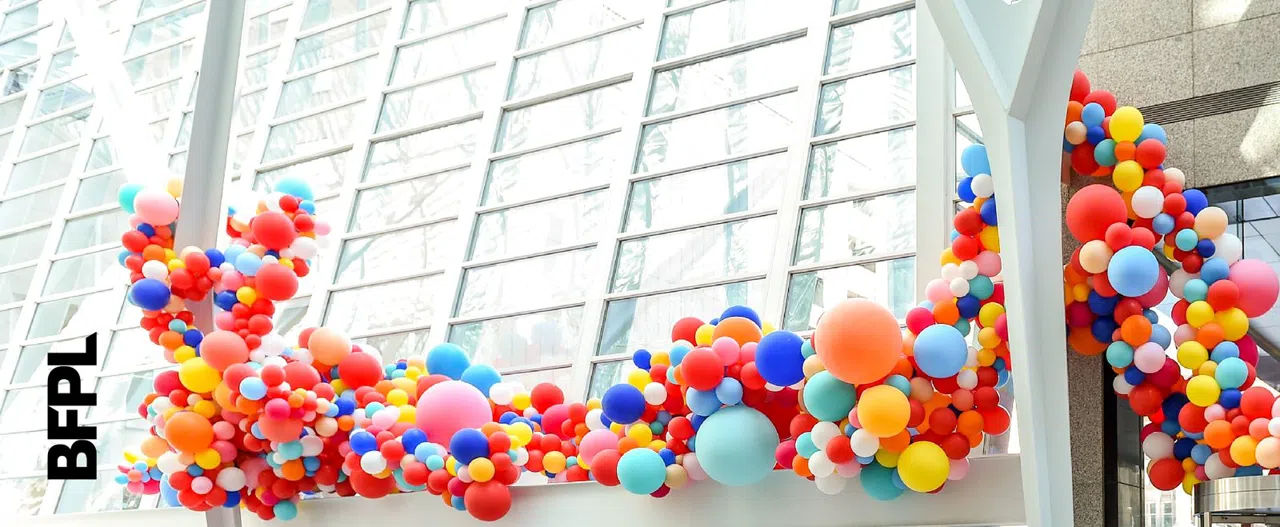
Back east to Bay and Front for Brookfield Place — Allen Lambert Galleria (Bay at Front), the white tree-like ribs that most people leave Toronto with a photograph of. Santiago Calatrava designed it as a public thoroughfare, so it is free and open seven days, and the light decides when you go: mid-morning, when the sun rakes down through the canopy, rather than at the lunchtime crush when it is a corridor of people on their phones. Building security is relaxed about photography but will ask tripods and larger tours to keep the central aisle clear, so shoot from the sides.
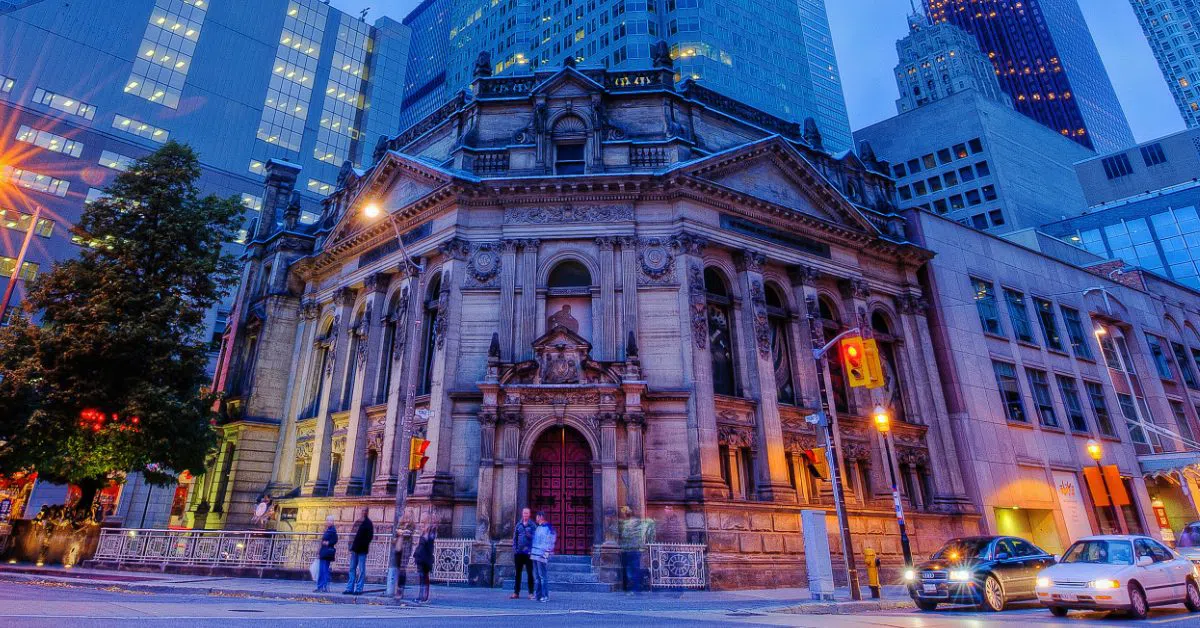
The Hockey Hall of Fame (inside Brookfield Place, Front at Yonge) is the one paid museum in the district and the one stop that earns its ticket even if you have never watched a game, purely for the vaulted former bank chamber where the Stanley Cup sits. Admission is C$29.95 adult, C$24.95 senior, C$19.95 for youth aged four to thirteen and free under three, plus tax. Groups get dedicated rates and should book in advance through the admissions office, which will also split a large party, because the Great Hall bottlenecks badly and nobody enjoys queueing inside a museum. One date to note if your trip runs late: it closes for Induction Day on 9 November 2026.
The PATH is the October answer
The PATH is thirty-odd kilometres of climate-controlled tunnel threaded under the whole district, and in October it is the reason a wet afternoon does not end your plans. It is free and open to everyone, but it is not one building: it runs through dozens of private ones, each with its own rules, signage and closing time. Walk it before 11.30am or after 2pm; in the lunchtime surge a group simply cannot hold together.
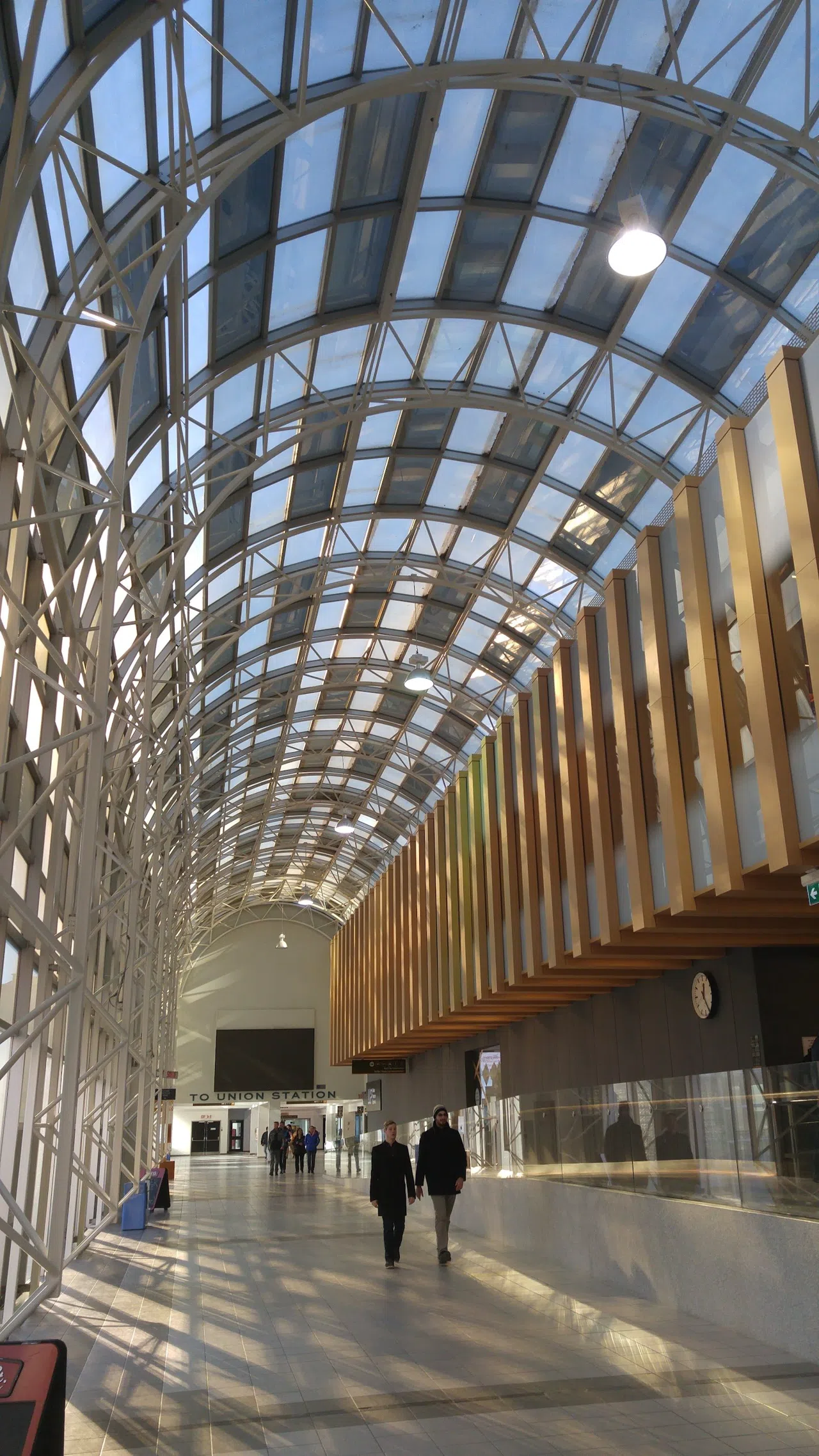
Be realistic about hours. Many office connectors shut between 6pm and 7pm on weekdays and most close on Sundays, so the PATH is a weekday asset rather than an any-time one. If you are counting on it to get from Union Station to the core without a coat, check that your leg of it is open before you commit. The retail spines stay lit long after the office links are locked.
Coffee that the office actually drinks
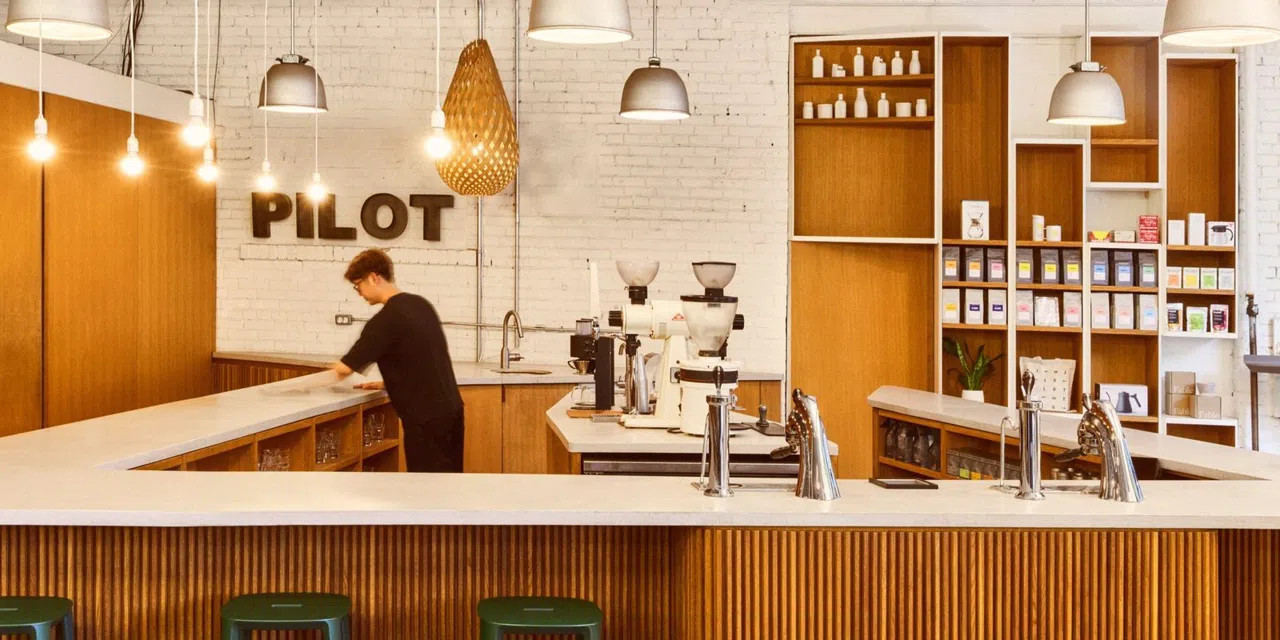
Pilot Coffee Roasters — Bay Adelaide Centre (Bay at Adelaide) is the Bay Street coffee stop rather than the tourist one. Counter service, small room, Monday to Friday 7am to 3.30pm, around C$4 to C$7. It works for two or three people and not at all for a group of fifteen, and it closes at weekends like most of the core, which tells you who lives here and who only works here.
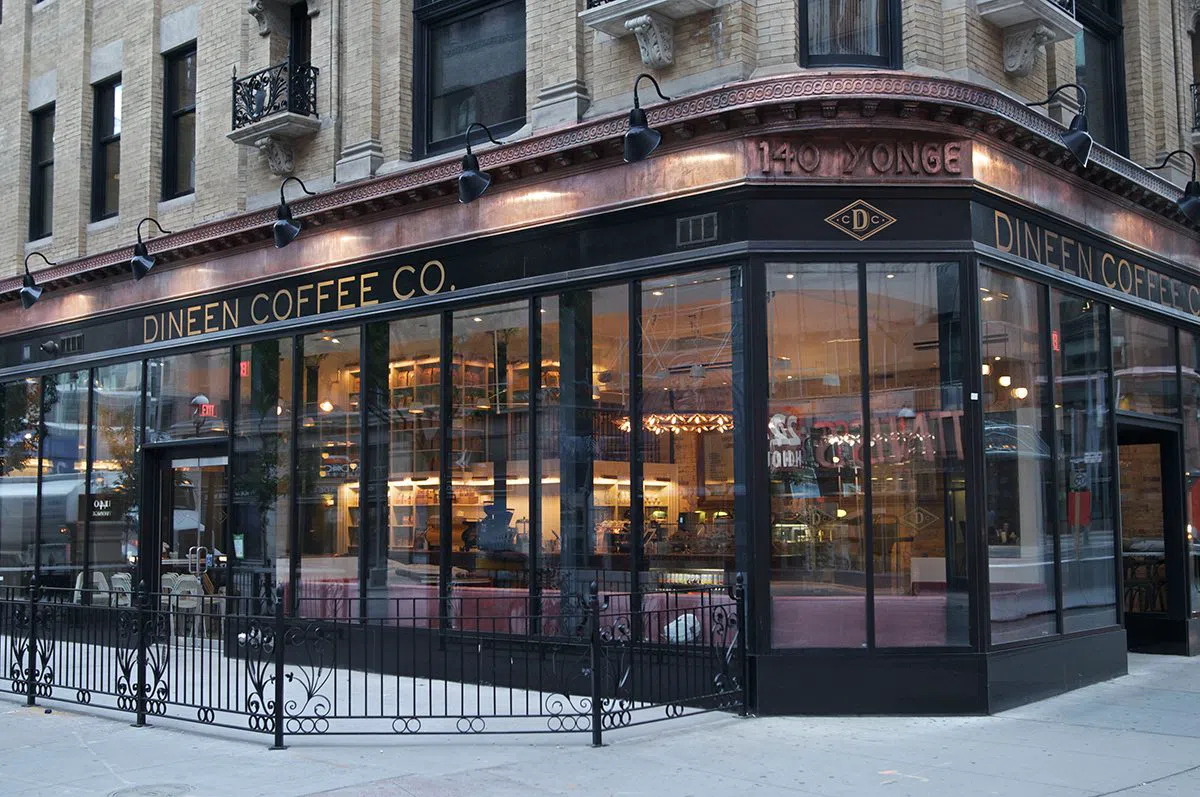
Five minutes east, Dineen Coffee Co. (140 Yonge at Temperance) is the reliable Saturday option, in a restored 1897 building with high ceilings and more room to sit. Walk-in only, no reservations, coffee about C$4 to C$7 and pastries C$5 to C$8. It is happy with a small group but fills at weekday lunch. On a weekend walk, plan your coffee here and not on Bay.
Two views, one of which comes with a bar stool
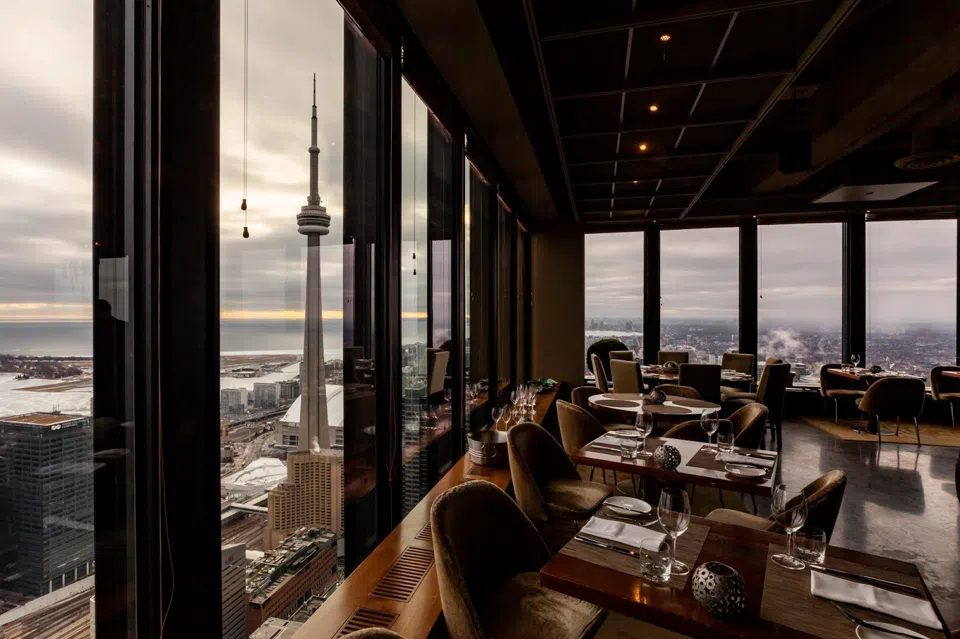
Canoe Restaurant & Bar sits on the 54th floor of the TD Bank Tower (Wellington West) and holds the best view in the district that is not a ticketed observation deck: rail corridor, lake, and the tower tops you have just walked under. Dinner is C$$$$, with mains roughly C$55 to C$75; online bookings take up to twelve guests, parties of nine to twelve go on a set Chef's Choice menu, and anything larger goes through private dining. The cheap way in is a drink at the bar, with walk-ins from 6.30pm subject to space. Check the calendar first: it is closed Saturdays and Sundays, and closed on 12 October 2026, which catches out a great many weekend visitors.
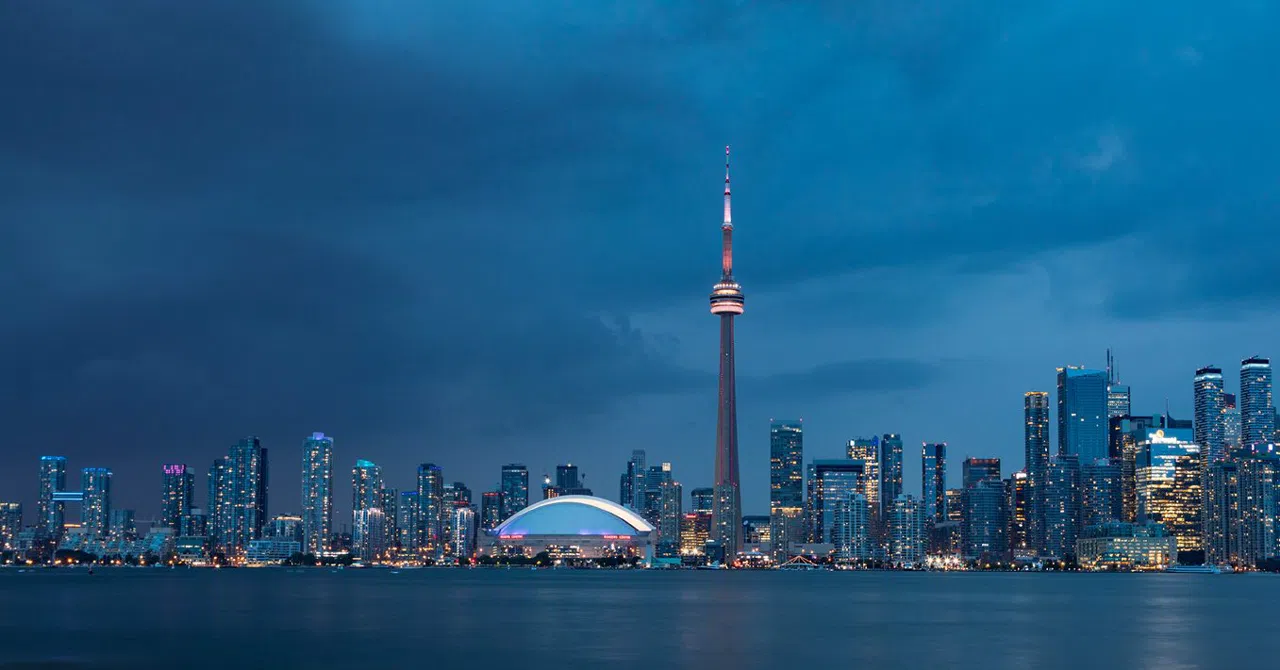
Il punto panoramico a pagamento che la maggior parte delle persone desidera è la CN Tower, a dieci minuti a piedi a sud-ovest della Union Station, aperta tutti i giorni dalle 9.30 alle 23. Il biglietto d'ingresso generale parte da circa C$47 per adulto; The Top (in precedenza SkyPod) aggiunge da C$12 a C$20, mentre EdgeWalk, che opera in piccoli gruppi da fine aprile a ottobre e solo quando il tempo lo permette, parte da circa C$199. Prenota una fascia oraria invece di fare la coda, e vai alla fine della giornata anziché all'inizio, così potrai guardare giù e riconoscere le torri sotto le quali sei passato.
Dove finisce la passeggiata
The Park at CIBC Square (su Bay, appena a sud di Front) è un parco pubblico rialzato, sospeso sopra il corridoio ferroviario. È raddoppiato di dimensioni nel 2026 ma è ancora in gran parte sconosciuto ai visitatori, il che ne fa il punto panoramico più nuovo e pulito sul margine meridionale del distretto e la conclusione naturale di una passeggiata architettonica: vedi lo skyline appena attraversato, ricomposto, con l'erba sotto i piedi. È gratuito e i gruppi informali sono benvenuti; gli eventi organizzati richiedono il permesso dell'edificio.
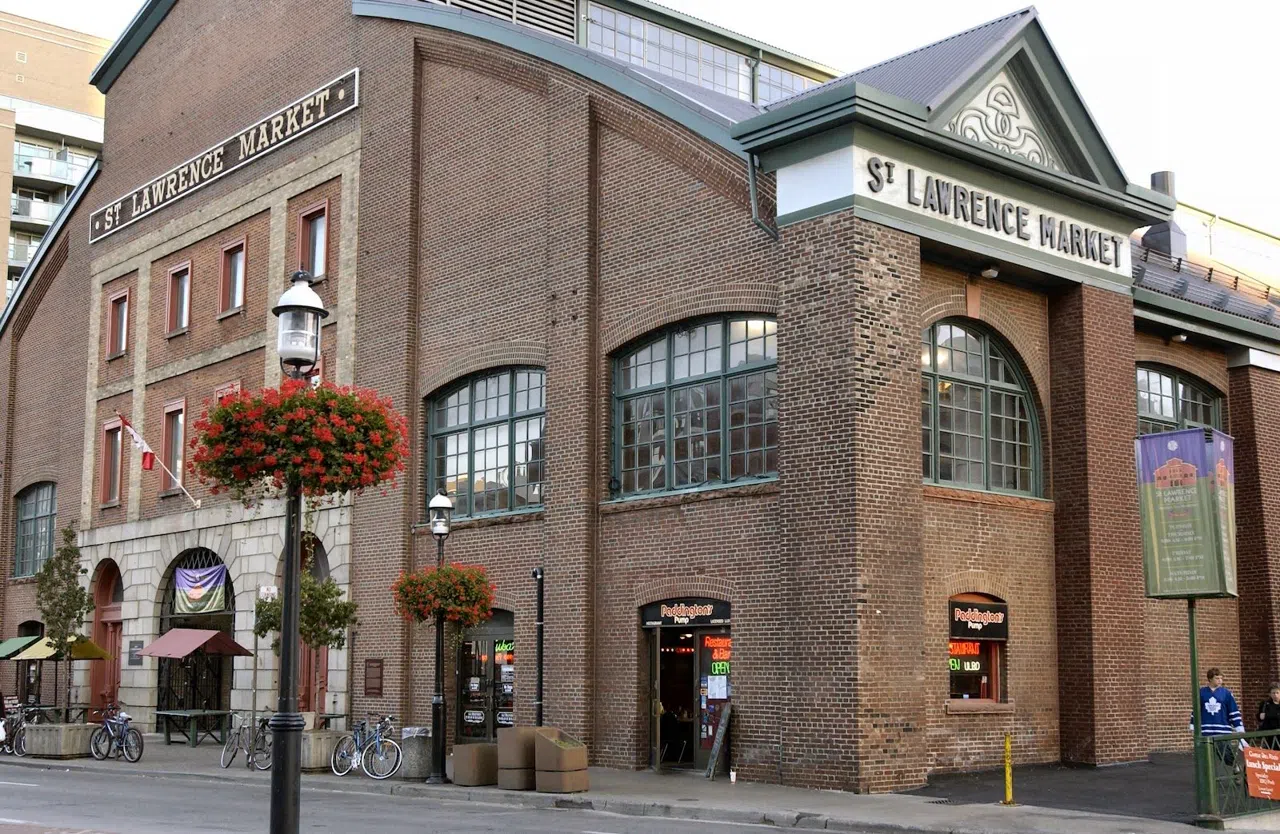
Se preferisci concludere con il pranzo, il St. Lawrence Market è a dieci minuti a est lungo Front Street. L'ingresso è gratuito, accoglie gruppi di qualsiasi dimensione e il pranzo costa da C$10 a C$20. Il South Market è aperto dal martedì alla domenica e il mercato degli agricoltori del sabato apre alle 5 del mattino; i corridoi sono stretti nel picco del sabato, quindi vieni in gruppo in un feriale di mattina o dopo le 13. È chiuso il lunedì, incluso il Thanksgiving Monday, 12 ottobre 2026.
Con una guida o da soli
Il distretto si visita da soli ed è gratuito, quindi l'unico motivo per pagare è l'interpretazione, e per questo esiste un'opzione pensata appositamente. Il Toronto Society of Architects — Towers Walking Tour si svolge il sabato dalle 13.30 alle 15.30, circa 120 minuti, con biglietto d'ingresso generale di C$15 e gratuito per i soci, guidato da persone che progettano edifici in questa città. Le iscrizioni all'ultimo momento sono accettate in base alla capienza e serve il contante di importo esatto; un gruppo numeroso dovrebbe prenotare anziché presentarsi. La stagione 2026 si estende fino a metà ottobre, quindi una visita a ottobre coglie le ultime date anziché una scelta completa. Organizza il tuo sabato intorno a questo.
Anche tour commerciali a piedi e in bicicletta più ampi attraversano il distretto, e operano sette giorni su sette, da circa 89 USD a persona. Il sistema di prenotazione segnala i più richiesti come probabilmente sold out, quindi se una mezza giornata guidata è il perno del tuo viaggio, prenotala prima di partire anziché la mattina stessa. Andare da soli non costa nulla e perde solo il commento.
Il momento migliore per andare
Le mattine feriali sono la finestra migliore. Le sale bancarie sono accessibili solo durante l'orario di lavoro, Pilot è aperto solo nei feriali, il PATH è completamente collegato e Brookfield Place ha la luce migliore prima delle 11. Punta a essere su Bay Street entro le 9.30, visita torri e sale prima delle 11.30 ed esci dai tunnel prima della ressa del pranzo.
Il sabato è l'altro buon giorno, ma diverso. Hai il tour guidato da architetti alle 13.30, il caffè da Dineen, la TD Gallery of Indigenous Art, Brookfield Place e il mercato degli agricoltori, ma niente sale bancarie, niente Canoe e un PATH a macchia di leopardo. La domenica è la più povera: Union Station, il Royal York, Brookfield Place, la Hockey Hall of Fame e il mercato sono aperti, ma quasi tutto il resto no. Nel periodo specifico a cui è dedicata questa guida, il 12 ottobre 2026 è il Thanksgiving Monday, con Canoe e St. Lawrence Market entrambi chiusi.
Quanto al meteo, a ottobre Toronto può passare da quindici gradi e cielo sereno a cinque gradi e pioggia battente nel giro di una settimana. Costruisci la passeggiata in modo che il PATH, Union, la hall del Royal York e Brookfield Place siano le tue alternative al chiuso, e tieni flessibile la CN Tower: con le nuvole basse la vista non vale nulla, ma il biglietto costa comunque C$47.
Ne vale la pena?
Sì, con una precisazione sulle aspettative. Qui non ci sono cancelli. È un pezzo di città del Novecento denso e leggibile che per caso è gratuito, e quanto ne ricavi dipende da quanto sei disposto a guardare in alto e a leggere una facciata. Va bene per viaggiatori appassionati di architettura e design, fotografi, chiunque abbia mezza giornata tra un treno e il check-in in hotel, e coppie che amano camminare e chiudere in alto. Va meno bene per le famiglie: la Hockey Hall of Fame sostiene quasi da sola quella parte della giornata. I grandi gruppi organizzati devono aspettarsi di essere divisi tra le sale bancarie e la piccola galleria, e nessuno dovrebbe promettere loro gli interni.
Se nel tuo viaggio hai solo una mezza giornata in centro, è un modo ragionevole per trascorrerla, soprattutto con un meteo che esclude le isole o il lungolago.
Informazioni pratiche
Come arrivare. Union Station si trova sulla linea 1 della metropolitana ed è il capolinea dell'UP Express da Pearson, a circa 25 minuti dall'aeroporto. King Station è al centro del distretto, e il tram 504 corre lungo King stessa. Una carta contactless o un tocco con Presto copre una singola corsa TTC; l'intera passeggiata è pianeggiante e ben pavimentata, e qui non ti serviranno mezzi di trasporto tra due fermate, eccetto che per la CN Tower, che resta comunque raggiungibile a piedi.
Contanti e carte. Le carte sono accettate ovunque su questo percorso, con due eccezioni per cui vale la pena avere con sé qualche banconota: la visita guidata da architetti richiede contante di importo esatto, e alcune bancarelle del mercato preferiscono i contanti.
Tempi. Due o tre ore a piedi, quattro o cinque con il museo e il pranzo. Mattine feriali per gli interni, sabato per il tour e il mercato, e controlla le chiusure del 12 ottobre 2026 se sei qui in quella settimana.
Budget. La passeggiata in sé, la galleria, le sale bancarie, la TD gallery, il PATH, il parco rialzato e la sala del mercato sono tutti gratuiti. Aggiungi circa C$30 per la Hockey Hall of Fame, C$15 per il tour guidato da architetti, circa C$47 e oltre per la CN Tower, e da C$20 a C$26 per un cocktail in quota. Si può considerare una giornata gratuita, oppure circa C$95 con tutto incluso.
Dove dormire. Dormire nel distretto ti regala i weekend più tranquilli del centro città e due minuti a piedi da Union, al prezzo di un nucleo che si svuota dopo le 19. Confronta tariffe e posizioni con la ricerca hotel a Toronto, e leggi il resto della città insieme nella nostra guida di Toronto.
Prima di partire
Il Financial District di Toronto vale una visita se non ti interessa la finanza?
Sì, perché ci vai per l'architettura piuttosto che per l'industria finanziaria. Gli otto isolati intorno a Bay e King ospitano una fitta serie di edifici moderni gratuiti e accessibili, più due interni gratuiti (la Allen Lambert Galleria a Brookfield Place e la sala bancaria di Commerce Court North) e un museo a pagamento, la Hockey Hall of Fame. Se non ti piace guardare gli edifici, saltalo: nient'altro qui reggerà il pomeriggio.
Quanto dura una passeggiata nel Financial District?
Due o tre ore a passo tranquillo per le torri, la galleria e le sale bancarie, oppure da quattro a cinque ore se aggiungi la Hockey Hall of Fame e il pranzo al St. Lawrence Market, a dieci minuti a est. Il Toronto Society of Architects Towers Walking Tour, guidato da architetti, dura circa 120 minuti il sabato a partire dalle 13.30 e copre solo il nucleo centrale.
Riesci davvero a entrare nelle torri delle banche?
Alcune sì, ma non sempre. La galleria di Brookfield Place è un passaggio pubblico, aperto sette giorni su sette e gratuito. La TD Gallery of Indigenous Art si visita gratuitamente senza prenotazione e apre nel fine settimana. La sala bancaria di Commerce Court North è l'atrio di un ufficio in funzione: accesso nei giorni feriali durante l'orario lavorativo, senza biglietto, ma l'ingresso è del tutto a discrezione della sicurezza, quindi tieni il gruppo piccolo e non contarci per certo. L'ex edificio della Toronto Stock Exchange è oggi uno spazio privato per eventi, quindi il fregio della facciata si ammira dal marciapiede.
Il PATH è aperto nel fine settimana e la sera?
In parte, e qui molti si sbagliano. Il PATH è gratuito e corre per una trentina di chilometri sotto il distretto, ma attraversa decine di edifici privati con orari propri. Molti collegamenti degli uffici chiudono tra le 18 e le 19 nei giorni feriali e la maggior parte chiude la domenica. Consideralo un percorso feriale per i giorni di pioggia, e percorrilo prima delle 11.30 o dopo le 14 per evitare la ressa del pranzo.
Cosa è aperto nel Thanksgiving Monday, lunedì 12 ottobre 2026?
Union Station, la hall del Fairmont Royal York, Brookfield Place e il Park at CIBC Square sono tutti aperti e gratuiti. Canoe è chiuso il 12 ottobre 2026, e il St. Lawrence Market è chiuso quel lunedì, come ogni lunedì. Pilot Coffee al Bay Adelaide Centre osserva orari solo nei giorni feriali, quindi per un caffè vai invece da Dineen al 140 di Yonge.