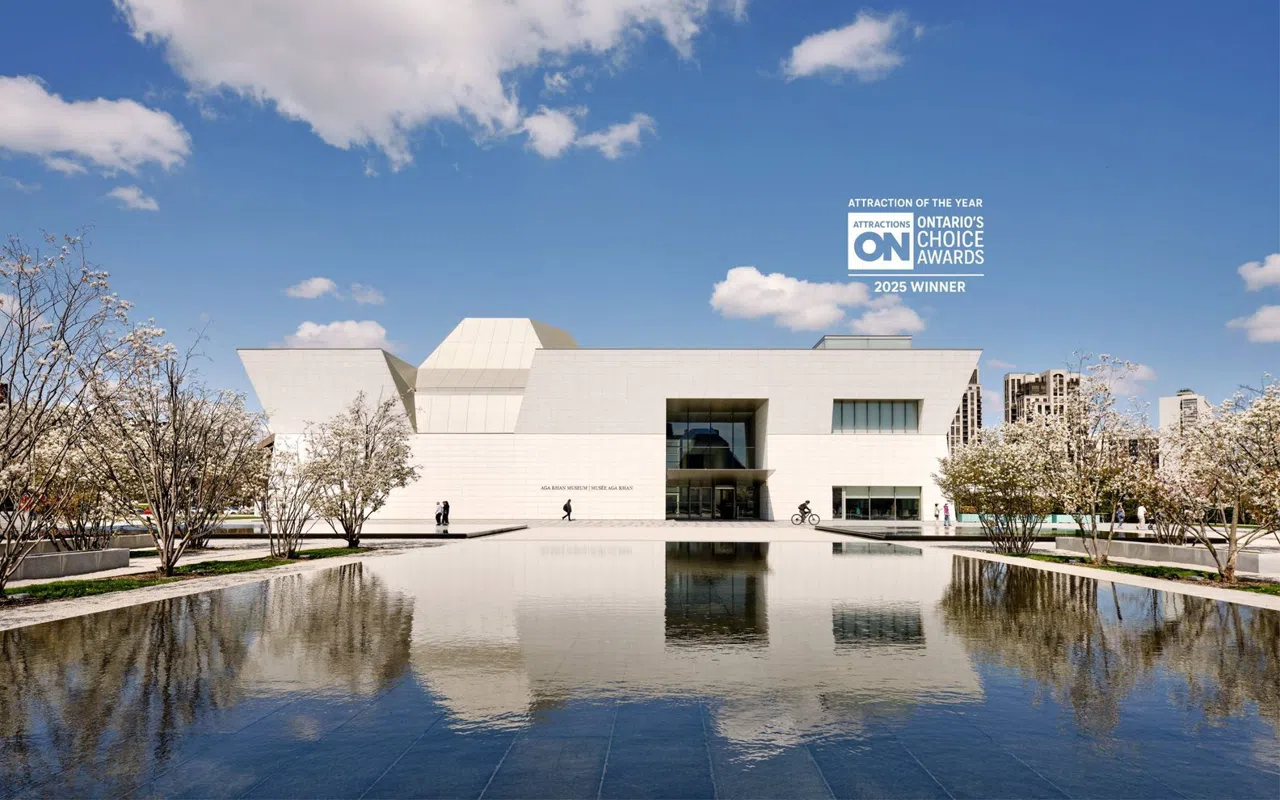

Walk north from Eglinton Avenue East along Wynford Drive in Don Mills on a clear afternoon and the granite starts doing something before you reach the door: sunlight breaks across a lattice of cut stone and moves in slow diagonal bands across the north face of the Aga Khan Museum. Prince Sadruddin Aga Khan spent four decades assembling the collection inside — more than 1,000 years of Islamic art, from Andalusian ceramics to Mughal manuscripts — and the building architect Fumihiko Maki designed to hold it treats light as part of the display, not a technical problem solved around it. This is a quiet museum in a quiet part of the city, and both of those facts are the point of this piece.
Inside the Museum: The Collection and the Building
The Aga Khan Museum occupies a single, deliberately restrained building at 77 Wynford Drive, and it holds one collection: more than a thousand years of art from the Muslim world, put together over four decades by Prince Sadruddin Aga Khan and now spread across two permanent galleries plus a rotating temporary space. Illuminated Qur'ans, Persian miniatures, Iznik ceramics, astrolabes, carved wood panels from Spain — the range is wide, but the museum stays small enough to walk in an hour and a half without rushing, which is unusual for a collection this deep.
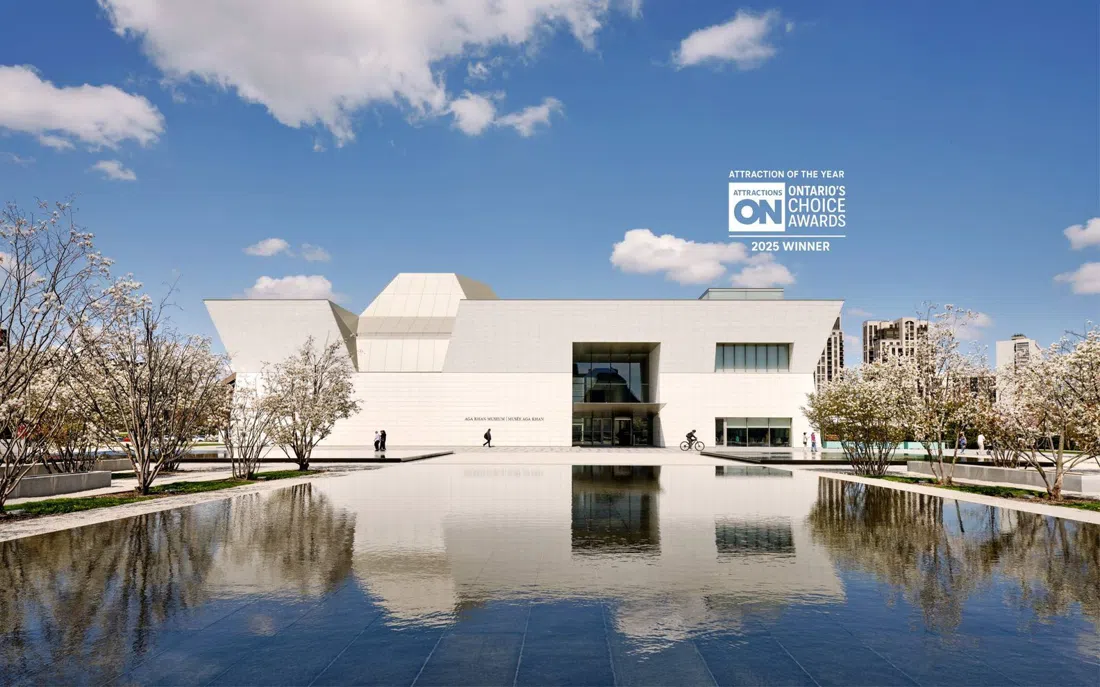
The building itself is worth the visit on its own terms. The exterior is Brazilian white granite, cut into a geometric pattern that reads flat at midday and comes alive in low, angled light — this is the detail worth timing your visit around. Go on a sunny afternoon, ideally an hour or two before closing, and watch the pattern move across the stone as the light drops. A grey or overcast day still lets you see the collection; it just won't show you what the building is actually doing.
Admission is $20 for adults, $15 for seniors, $12 for students, and free for anyone 25 and under — one ticket covers every gallery, so there's no add-on fee for temporary exhibitions. The museum is free every Wednesday from 4pm to 8pm, which is the single best-value slot in the building if your schedule allows it: same collection, same light in summer, zero cost. Groups can book private tours in advance at $15 per adult and $12 per senior, worth arranging if you're travelling with six or more people, since general admission tickets don't include a guide unless you specifically request one. Couples and solo travellers do fine simply walking in — the museum rarely feels crowded even on a paid afternoon.
The Campus: Ismaili Centre and Aga Khan Park
None of this is designed to be seen as a single stop. The Museum sits on a 6.8-hectare campus shared with the Ismaili Centre, Toronto (also on the Wynford Drive campus in Don Mills) and the Aga Khan Park (the same campus), and the three were planned together — walk out the Museum's front doors and the park is directly in front of you, with the Ismaili Centre's glass dome visible across it.
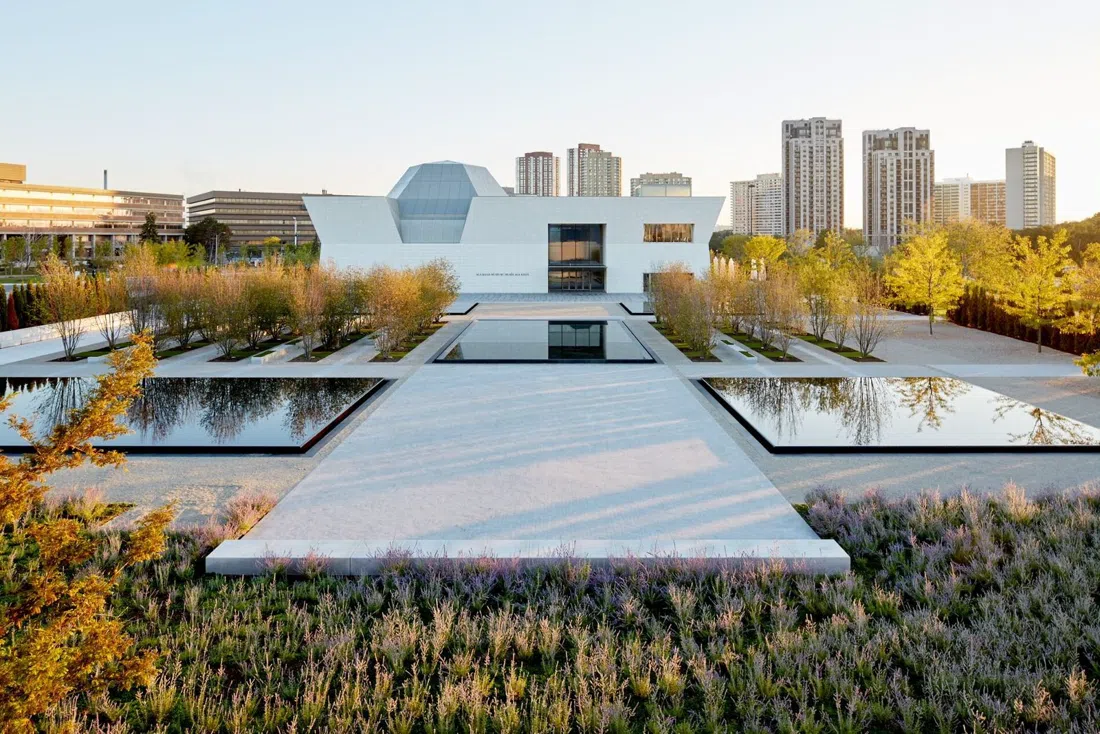

The Ismaili Centre is a working place of worship, not a museum, and its access reflects that: public areas and volunteer-led guided tours are free, but the prayer hall itself is closed to visitors during salat, so times will vary through the day. Groups should pre-book a tour through the centre's visiting page rather than showing up expecting a guide on the spot. It's a five-minute walk from the Museum's entrance, across the park.
The park itself needs no booking and costs nothing. It was designed as a contemporary reading of the Islamic charbagh — the four-part courtyard garden — using reflecting pools and formal rows of trees rather than literal historical reconstruction. It's the best free photo spot on the whole campus, and the most useful answer to "what do we do with the extra hour" if you've finished the Museum before your transit connection is due. Guided park tours are available through the site if you want the design explained rather than just walked through.
Treat the whole visit as one arc: Museum first (indoors, an hour to ninety minutes), then the park (twenty minutes, unhurried), then the Ismaili Centre if the timing and pre-booking line up. Budget two to three hours for the full campus rather than just the Museum's opening hours.
Don Mills Add-Ons: Two Quieter Stops
Two more places sit close enough to fold into the same half-day without a transit ride.
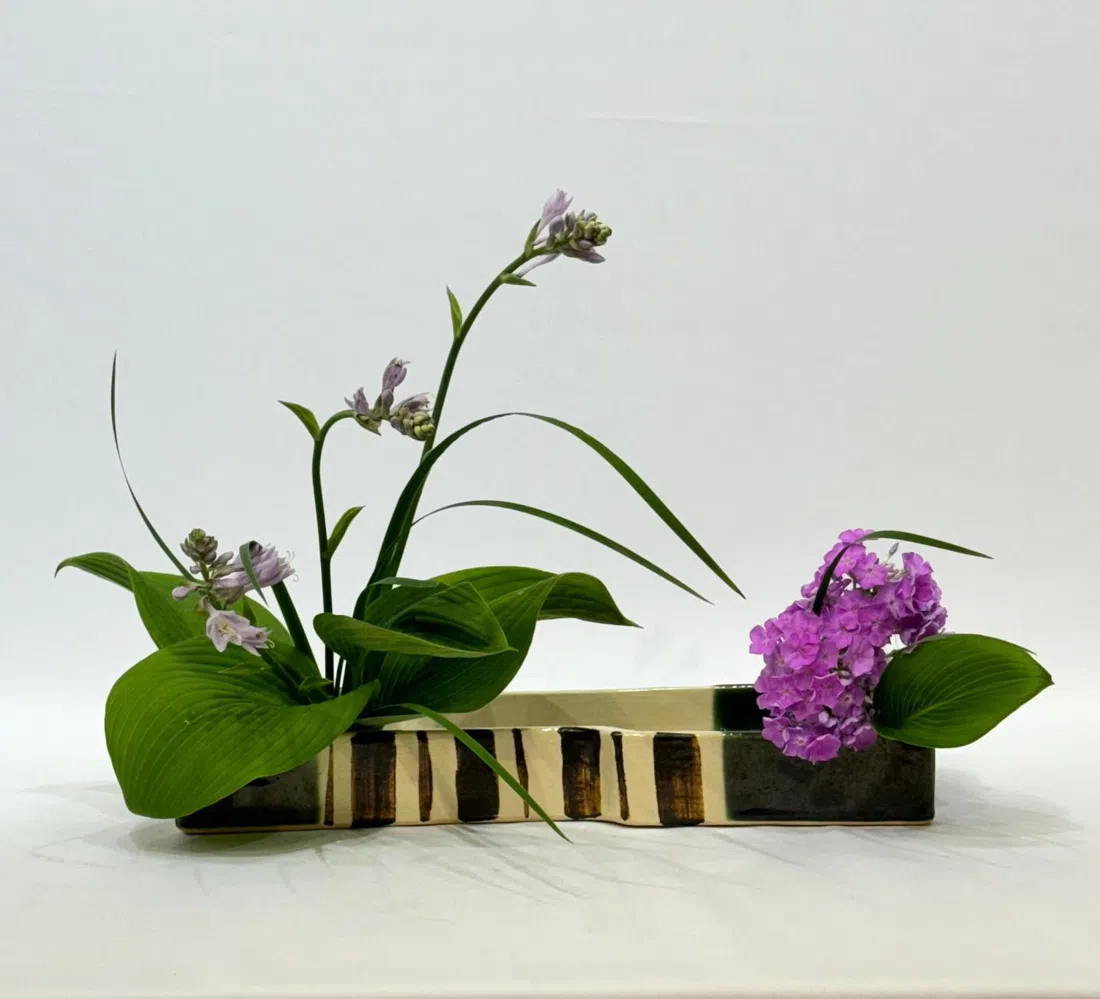
The Japanese Canadian Cultural Centre is literally around the corner from the Museum, in the same Don Mills pocket. Entry to the centre itself is free; it runs festivals, exhibitions, and classes on a rotating schedule, and individual programs are priced separately from general entry. It's not a scheduled museum stop so much as a check-what's-on add — worth a look if your visit lands on a festival weekend, skippable otherwise.
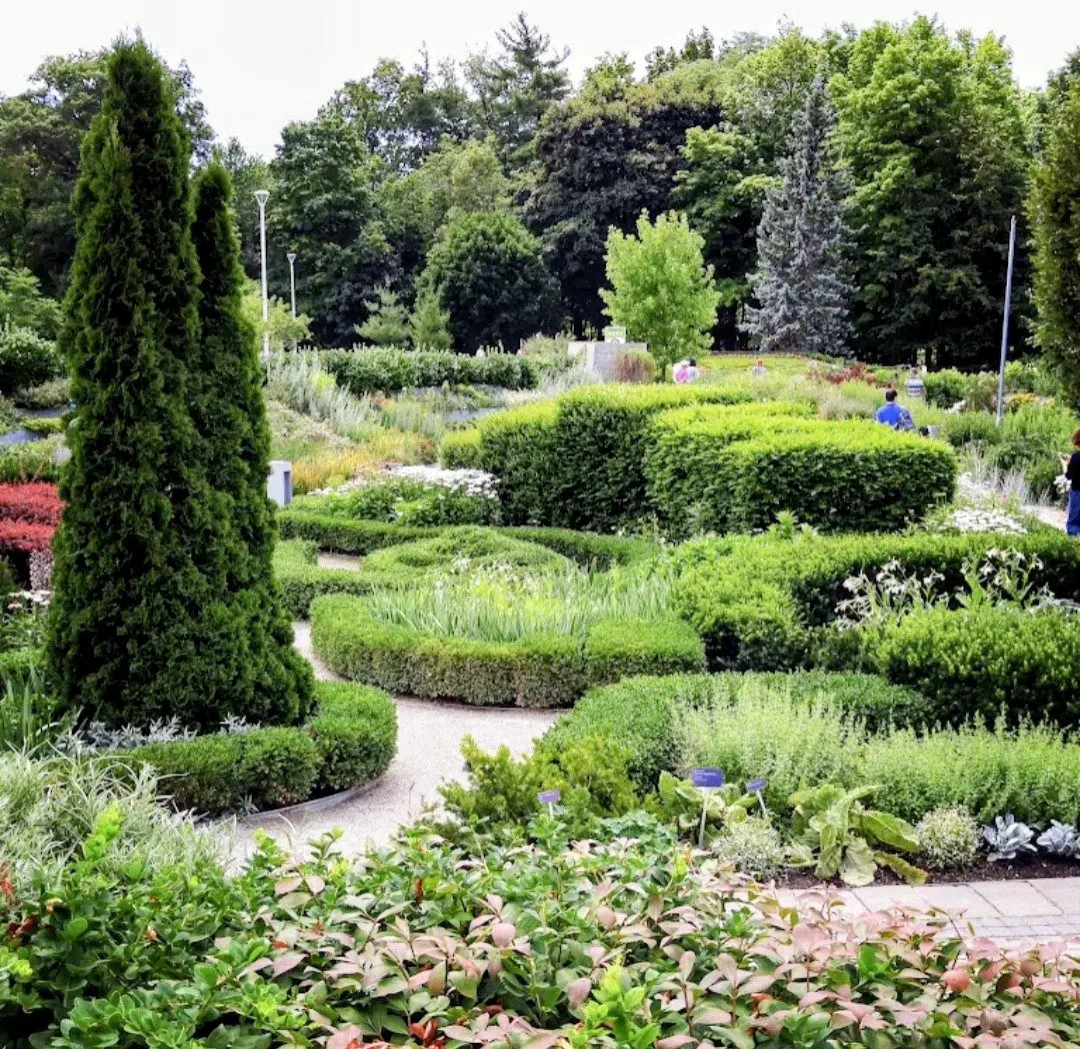
A short distance further, in the same part of Don Mills, is the Toronto Botanical Garden, also known as Edwards Gardens — a different kind of garden from the Aga Khan's formal charbagh: looser, plant-collection-driven, free to enter. Ninety-minute volunteer-guided group tours can be booked through the site, useful if you're bringing a group of ten or more who'd rather have context than wander. Parking runs $4 an hour, capped at $16 a day, which matters more here than at the Museum campus since this stop tends to draw drivers rather than transit riders. It's a softer, greener counterpoint if you want to stack a second outdoor hour onto the day rather than heading straight back downtown.
A Second Museum, If You Want the Contrast
If a single museum doesn't fill your day, the honest comparison — and one worth making deliberately rather than by accident — is with how Toronto's general museums handle Islamic and West Asian material next to a collection built around nothing else.
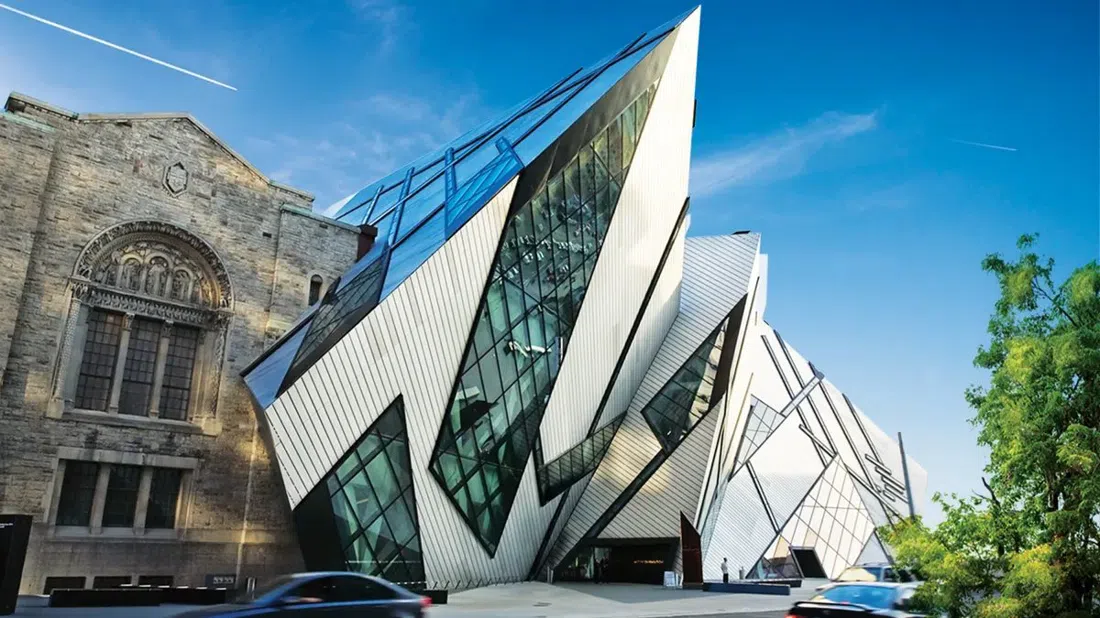
The Royal Ontario Museum, downtown near Museum subway station, is the city's biggest general collection: art, culture, and natural history under one roof, including its own smaller holdings from the Islamic and West Asian world. Adult admission runs about $23, seniors $19.50, students $16.50, children $14.50, and groups of 20 or more get a discounted rate booked through the group-visit page. It's a useful contrast piece precisely because the Islamic material there is one gallery among dozens, not the whole building.
The Art Gallery of Ontario, downtown on Dundas Street West, is the Western-canon counterpart for readers who want to build a two-museum day: general Western fine art, adult tickets $30, youth 10–17 at $15, free for anyone 17 and under. Groups of ten or more get a discounted self-guided rate of $24 per person, but it has to be arranged in advance by emailing group sales — this isn't a walk-up group discount.
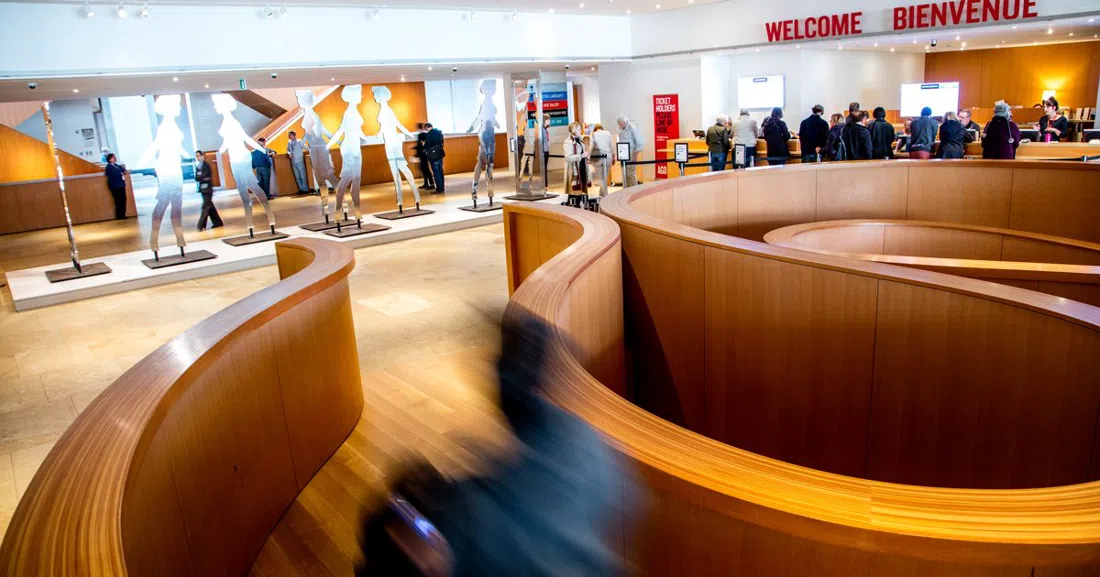
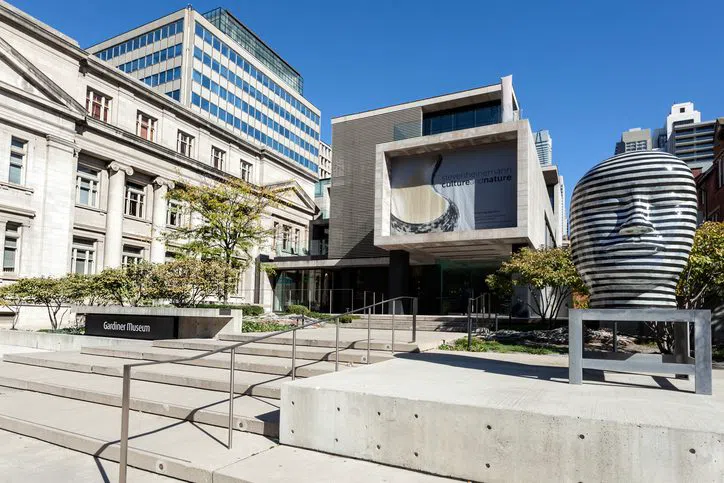
Two smaller, more specific museums pair naturally with the Aga Khan's own material. The Gardiner Museum, next to the ROM, is Canada's only museum dedicated solely to ceramic art — a direct companion to the Aga Khan's own ceramics holdings, and small enough to do properly in an hour. General admission runs roughly $15–18; groups of ten or more get $13 adult / $10 senior unguided, or $18/$13 with a guide, booked through the groups page. It's also free every Wednesday from 4pm to 9pm, which lines up conveniently with the Aga Khan's own Wednesday free window if you're planning a two-museum free-evening day — they're not walking distance from each other, so budget transit time between them.
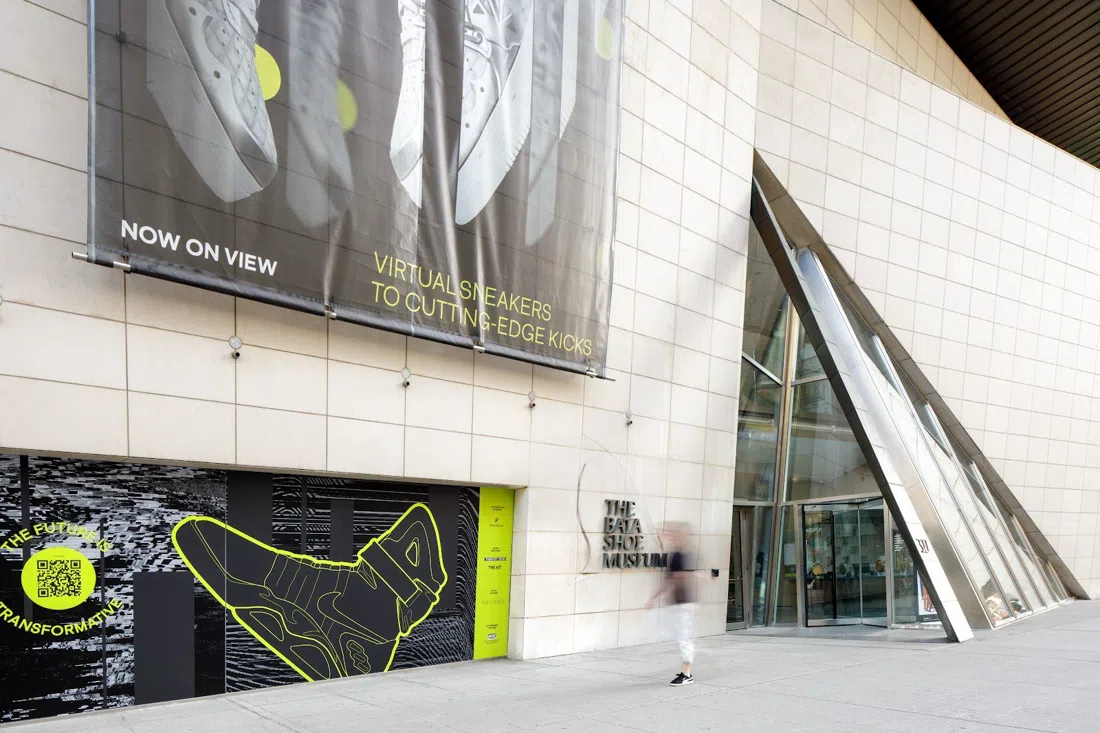
The Bata Shoe Museum, also downtown near the ROM, is the offbeat pick — nearly 15,000 footwear objects gathered from every continent, genuinely global rather than regionally focused. Admission runs roughly $16–18, worth checking on the day since it moves. Group tour rates are available by contacting the museum directly rather than through an online booking flow.
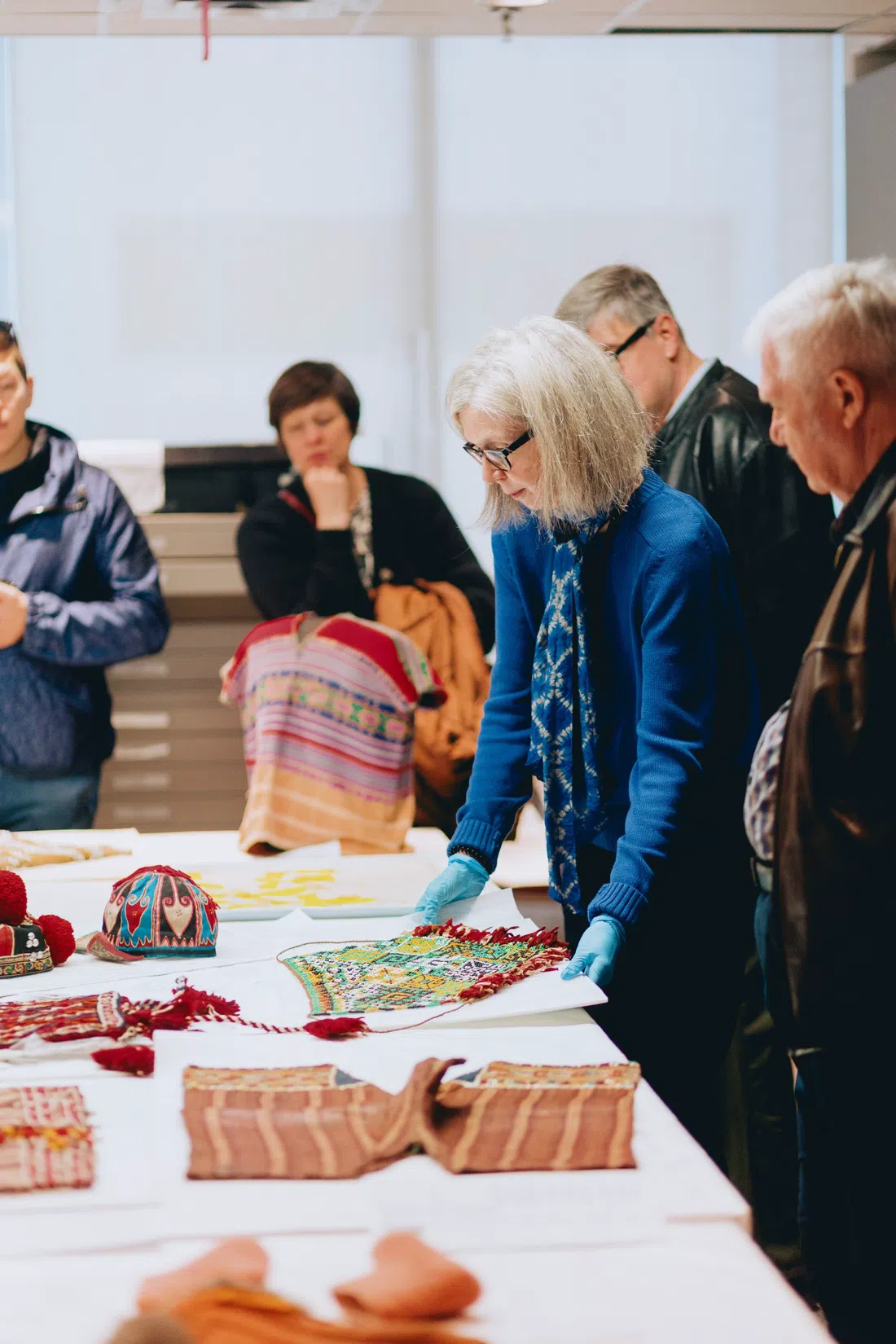
The Textile Museum of Canada, downtown near the AGO, is the most directly relevant to an Islamic-art-and-textiles reading of the day — but it's worth an hours-check before you go: it closed for eight months in 2025 over funding and only reopened on October 30, 2025, so confirm current opening days before building it into a fixed itinerary. Admission is $15 adult, $13 senior, $8 student and youth, free under 6. Group and school bookings run through the museum directly.
None of these downtown stops are walkable from the Aga Khan campus — this is a transit or driving trip, not a stroll, so treat "Museum day" and "downtown museum day" as two separate outings unless you're comfortable losing an hour to the trip between them.
Music: Koerner Hall
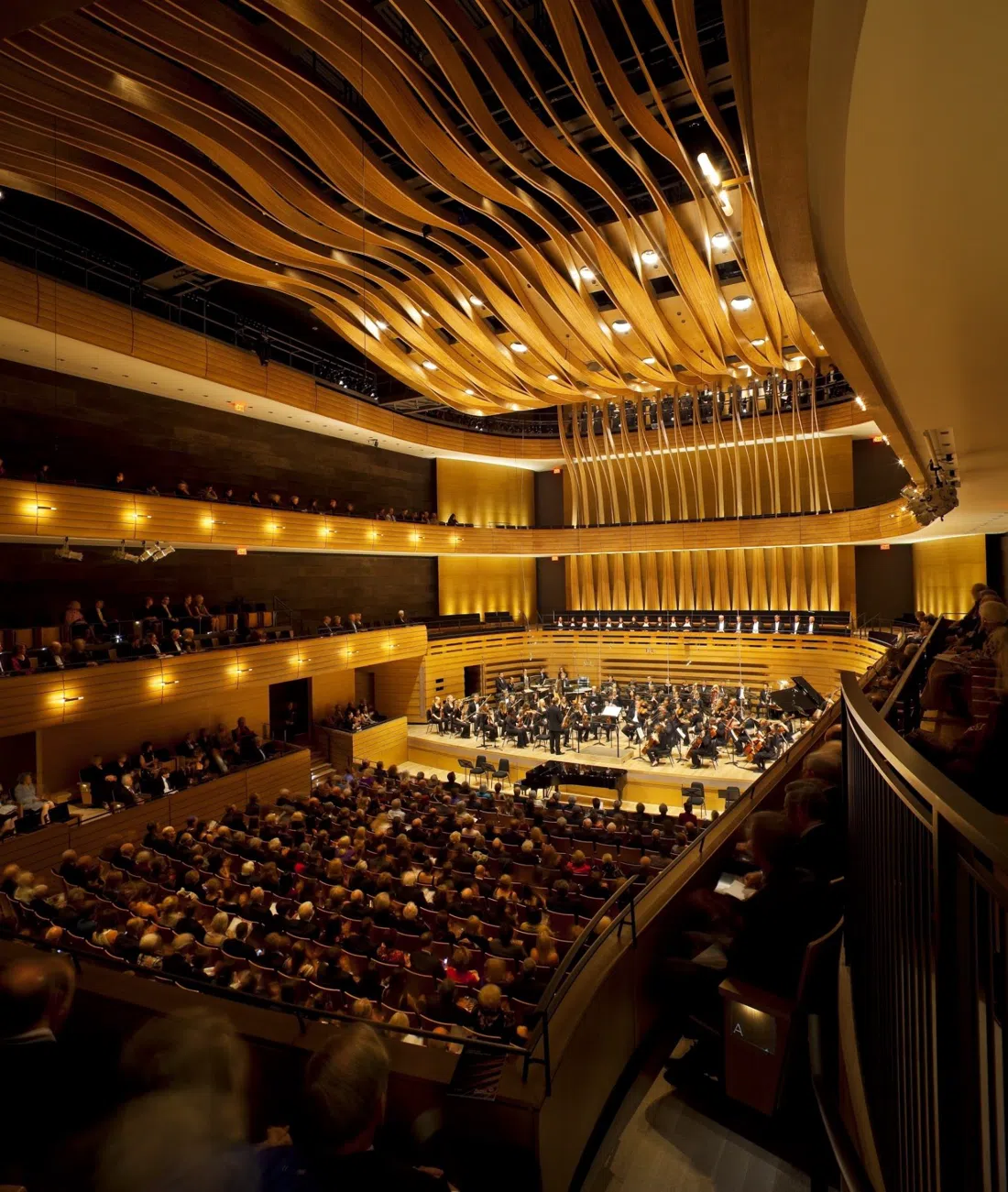
If your visit lines up with a concert, Koerner Hall, at the Royal Conservatory of Music on Bloor Street, is the city's serious room for global and roots music, not just classical programming. Tickets typically start around $54 and average closer to $147 depending on the show. The Conservatory's 2026/27 season includes a dedicated Global Music series — a direct echo of the kind of performance programming the Aga Khan Museum itself runs, and worth checking against your travel dates if you want to close the day on a concert rather than another gallery. The building's TELUS Centre also has group meeting and reception spaces for anywhere from 12 to well over 100 people, bookable through the Conservatory box office alongside group ticket inquiries.
Getting There, Timing, Cash, and Budget
All prices above are in Canadian dollars (CAD).
Transport: The Museum campus sits off Eglinton Avenue East at Wynford Drive, northeast of downtown. Line 5, the Eglinton Crosstown, stops at Aga Khan Park, a short walk from the Museum's front entrance — the simplest route from most downtown hotels is to connect onto Line 5 and ride to that stop directly. Driving works too; there's on-site parking, though check the museum's site for current rates before you go. Downtown museums (ROM, AGO, Gardiner, Bata Shoe, Textile Museum) cluster within walking distance of Bloor-Yonge and St. George subway stations on Line 1, so a downtown museum day and a Don Mills museum day are best planned as separate trips rather than one long loop.
Cash: Cards are accepted everywhere on this list; none of these venues require cash. Parking machines at the Toronto Botanical Garden take card as well as cash.
Timing: For the light effect on the Museum's granite façade, go on a clear afternoon rather than a grey morning. Both the Aga Khan Museum and the Gardiner Museum run free Wednesday evenings (4–8pm and 4–9pm respectively), so a Wednesday visit is the best-value day on this whole list if your schedule allows it. Budget two to three hours for the full Wynford Drive campus — Museum, park, and Ismaili Centre if pre-booked — and a separate half-day if you're adding a downtown museum.
Budget: A solo adult doing just the Museum, park, and Ismaili Centre spends $20 total — the park and centre are free, the Museum ticket is the only cost. Add a downtown museum and a typical day runs $35–50 per person depending on which one, before food or transit fares. Groups of ten or more should book ahead everywhere on this list; nearly every venue here has a separate, cheaper group rate, but none of them are walk-up discounts.
If you're building this into a longer stay, start from the Toronto guide for the wider city context, and use Toronto hotel search to find something within reach of either the downtown museum cluster or a Line 1/Line 5 connection out to Don Mills — the two halves of this itinerary sit far enough apart that where you sleep will decide how much backtracking you do.